GWO BST Sea Survival Course Overview 

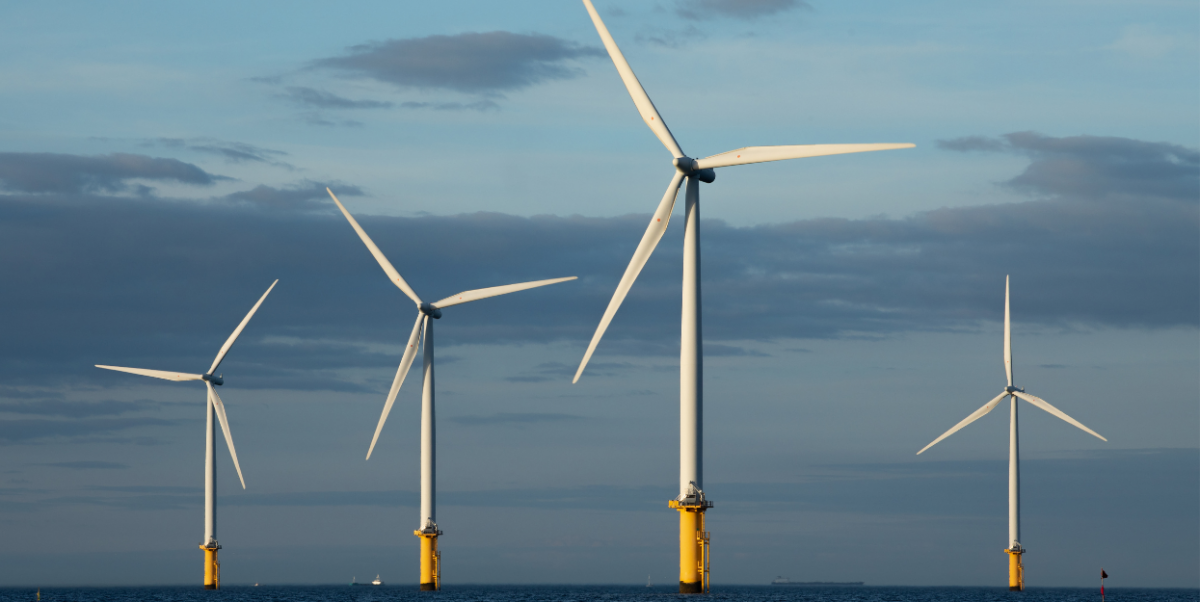
The Sea Survival module is an integral part of our new GWO accredited offshore wind farm training course.  

This course will prepare you to respond safely to life-threatening emergencies whilst working offshore. Including safe evacuation, casualty recovery, and the use of PPE. 


GWO Sea Survival Course Aims 

We work in partnership with Checkmate Safety Training to ensure that this course delivers an efficient combination of theoretical and practical training; to provide delegates with the fundamental skills they need to stay safe working with offshore wind farms. This includes learning preventative measures to stop accidents from occurring, and to ensure successful delegates can take fast and correct action in the event of a problem arising. 

 Preparing to work safely in an offshore wind energy environment means that you can protect yourself and your colleagues both onshore, aboard a transfer vessel, and when working with the wind turbine generators (WTGs). 

GWO Sea Survival Training Course Structure 

This course is designed to take place in two four-hour sessions and comprises ten sectionsSome of these will be theoretical five-minute discussions, and others will be longer and more in-depth, with two longer practical sessions to test your skills. Delegates will be in small groups of 12 per trainer for theoretical learning and four per trainer for practical work, to ensure each trainee gets the attention they need to become confident in these new skills. 

What Is GWO Sea Survival Training

An Introduction to the Maritime Skills Academy 

The course will begin with delegates being introduced to the training facility, its safety procedures, the trainers, and the other delegates. The aims and objectives of the course will be made clear as well as the plans for both ongoing and final evaluation. 

GWO Sea Survival Legislation 

This portion of the course will include a short discussion, covering both global and national safety legislation, emphasising the importance of understanding the regulations in place where you are working. 

Exposure, Cold Shock, Hypothermia and Drowning module 

The next section is theory-based, outlining the risks, signs, treatment of exposure, cold shock, hypothermia, and drowning. Identifying these symptoms is essential for peer and self-identification when responding to offshore emergencies. This way, signs can be treated accordingly, and casualties can be handled with care post-identification.

 Lifesaving Appliances and Personal Protective Equipment for Offshore Windfarm workers 

 The correct and confident usage of safety equipment is paramount in high-risk industries such as offshore and windfarm. With our GWO Sea Survival Course, delegates will receive thorough teaching and in-person demonstrations on the usage and donning of protective clothing and equipment. This will include personal protective equipment (PPE) and collective protective equipment such as lifesaving appliances (LSAs). 

SAR and GMDSS 

A discussion about search and rescue (SAR) protocols, and the global maritime distress signal system (GMDSS) to ensure delegates are aware of what to do in the event they are needed to help rescue a colleague, or they require rescuing themselves. 

Practical GWO Sea Survival 

The first practical session, where delegates are required to put the skills they have learned so far into practice, will include donning and using protective equipment, carrying out rescue procedures and using the correct distress signals. 

Safe Transfer to and from Wind Turbine Generators 

This section revolves around safety aboard the vessel used to transfer Wind Turbine Generator (WTG) workers to and from the offshore wind turbine farm. The safe handling of equipment and hazards relating to different types of transfers will be discussed. 

Installations, Vessels and WTGs 

This theory-based discussion will ensure delegates have all the information they need to remain safe onboard vessels, during the installation and maintenance of WTGs and are confident in executing contingency plans should issues arise. 

GWO Transfer Practical Training 

The second practical session will see delegates practising skills learned in the previous sections of the course. They will need to show they are comfortable transferring from dock to vessel and then to WTG, as well as safe handling of onboard equipment and safety procedures. During this session, delegates will demonstrate their ability to climb and descend during an emergency, as well as recovering casualties. 

 GWO Sea Survival Final Assessment 

Delegates are given the opportunity to reflect on what they’ve learned, as well as give a written and oral assessment of the training course. 

The final exam will include questions on all the modules covered in the course. 

Check our course dates now to find the perfect time for you to learn all you need to know about Sea Survival working with offshore wind energy. 


We now have even more course capabilities, in partnership with Checkmate Safety Training. Including GWO Fire Awareness and First Aid courses.  

Check out our new GWO page here to find out more! 
What is STCW Basic Safety Training? | Train at MSA

Maritime Skills Academy delegate Thomas Bishop is soon joining Windstar Cruises as a third engineer after completing his cadetship a few months ago.  In order to work on board, Tom had to complete his STCW Basic Safety Training. But what does that mean? 

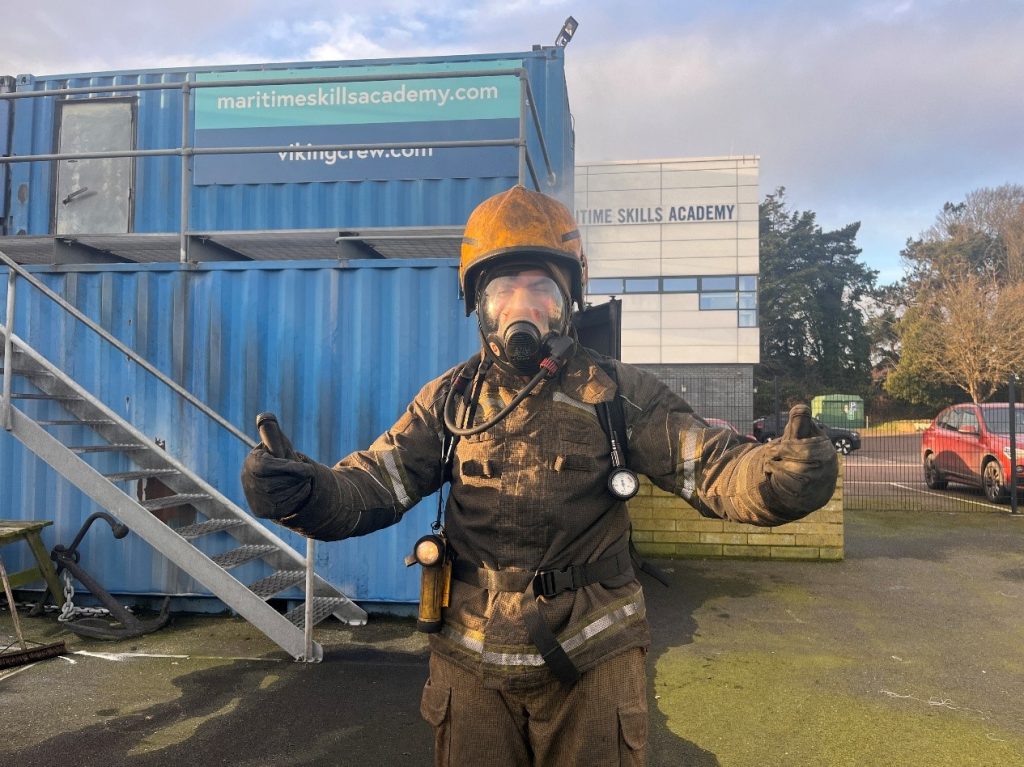
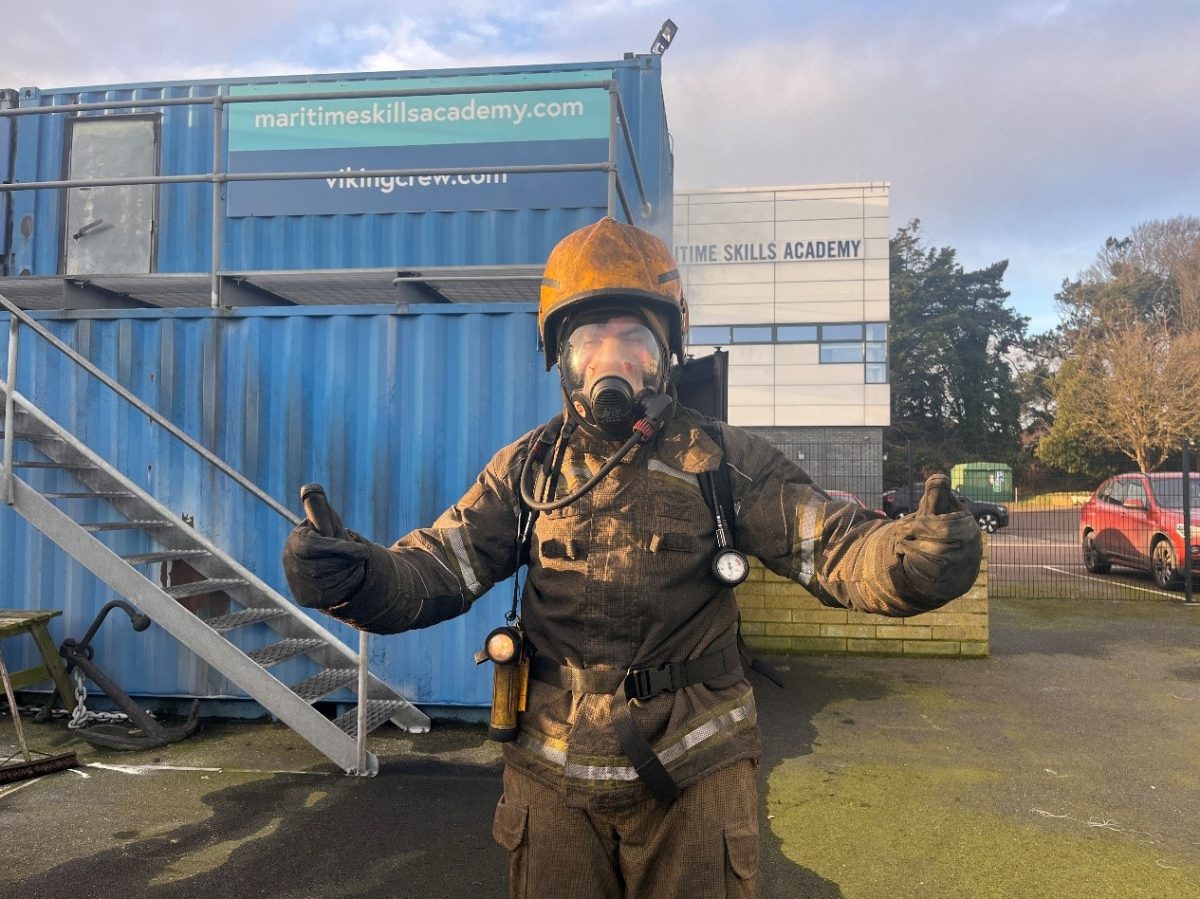
STCW Basic Safety Training for delegate Thomas Bishop | Image of Tom in full fire protective gear, holding his thumbs up to the camera

As a legal requirement, before you work at sea, you must complete four training courses that make up the 4-Part Basic STCW certificate. This includes Fire Prevention and Firefighting (FPFF), Personal Safety and Social Responsibilities (PSSR), Personal Survival Techniques (PST), and Elementary First Aid (EFA). 

After having completed his week of training, we caught up with Thom to find out how it went and how he feels it has prepared him for the next step in his career. 

Day 1 – Fire Prevention & Fire Fighting  

As someone who doesn’t play with fire, FPFF was a really good way to feel comfortable around fire by learning to use the equipment safely and being shown the proper methods of extinction, with explanations as to why we were doing it.  

In the first practical, we demonstrated how to use a fire blanket to put out a grease pan fire effectively. I think many of the delegates, who were experiencing firefighting for the first time, were amazed at how little effort it takes to put out a fire, but still the whole point of the course is not to underestimate dealing with fire, especially on board.  

With the fire extinguishers it was essential to practice using the equipment, such as testing them to ensure they work. So, when we’re doing he exercises, with the doors were open, and the fire raging, the instructors demonstrate how to make the most effective use of the fire extinguisher. You get to see how the fire behaves when it’s being actively attacked, and how it can reignite, and when it’s likely to reignite.  

Day 2 – Fire Prevention & Fire Fighting

On the fire training ground, we had a cold walkthrough, so we suited up and had a practice run with no fire, spotting early dangers, as it was still quite dark in the containers. Then, the instructors would break down the manoeuvres we would need to use, so we had the chance to practice and build some teamwork before going into the real thing: making sure you’ve got contact with the wall and the person at the front at all times, how to sweep properly, entry checks, remembering to check your pressure gauge before going in, complete the on-scene commander’s request, whether a search and rescue or fighting a fire.  

Tom and fellow delegates demonstrating how to safely enter a room with a fire, holding on to each other's shoulders | STCW Basic Safety Training

Afterwards, we were given feedback from the instructors before heading back in with a real fire. This is when it gets more interesting as it is hot in there, and nobody wants to be in there for too long! You’re exerting yourself, and the hotter you are, the harder you’re breathing, and the faster you’re getting through your oxygen.  

It was an excellent exercise to see it all in action when the fire was going. Unless you’ve been in a fire emergency before, this is the next best thing. The instructors are there with you, so if there are any issues, you’ve got an expert who will immediately be able to assist as needed, and you feel like you’re in safe hands.  

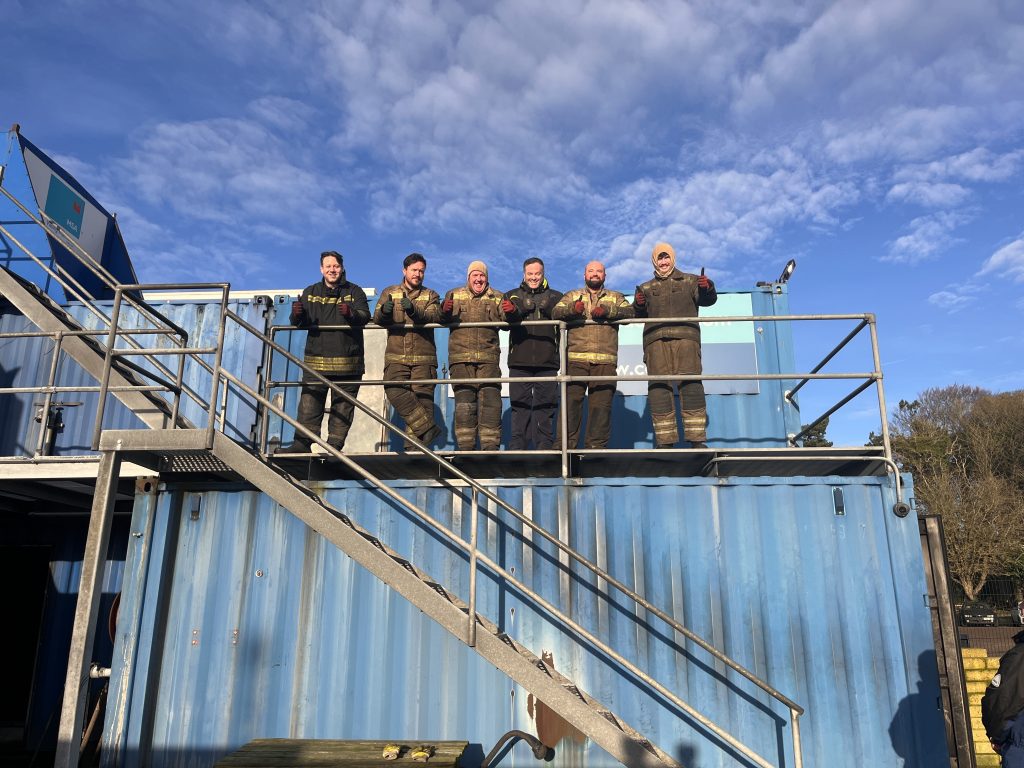
Tom and other delegates stood on a balcony all smiling and holding thumbs up to the camera

Day 3 – Personal Safety & Social Responsibilities  

Anyone who’s ever completed PSSR will know it’s not the most riveting course– yet the instructors here are quite a funny bunch and always find a way to tell you a funny or silly story – that is always relevant to keep you interested. There’s nothing worse than a ‘death by PowerPoint’. However, these instructors have successfully delivered an engaging class on PSSR.  

Day 4 – Personal Survival Techniques 

PST was also excellent. We were shown how to don a life jacket correctly —and had a challenge in which we had to put them on in under a minute (this is the standard time expectancy for donning a life jacket). We then tried donning the immersion suits, for which I now hold the record for the fastest time to put one on, at 1 minute and 5 seconds. 

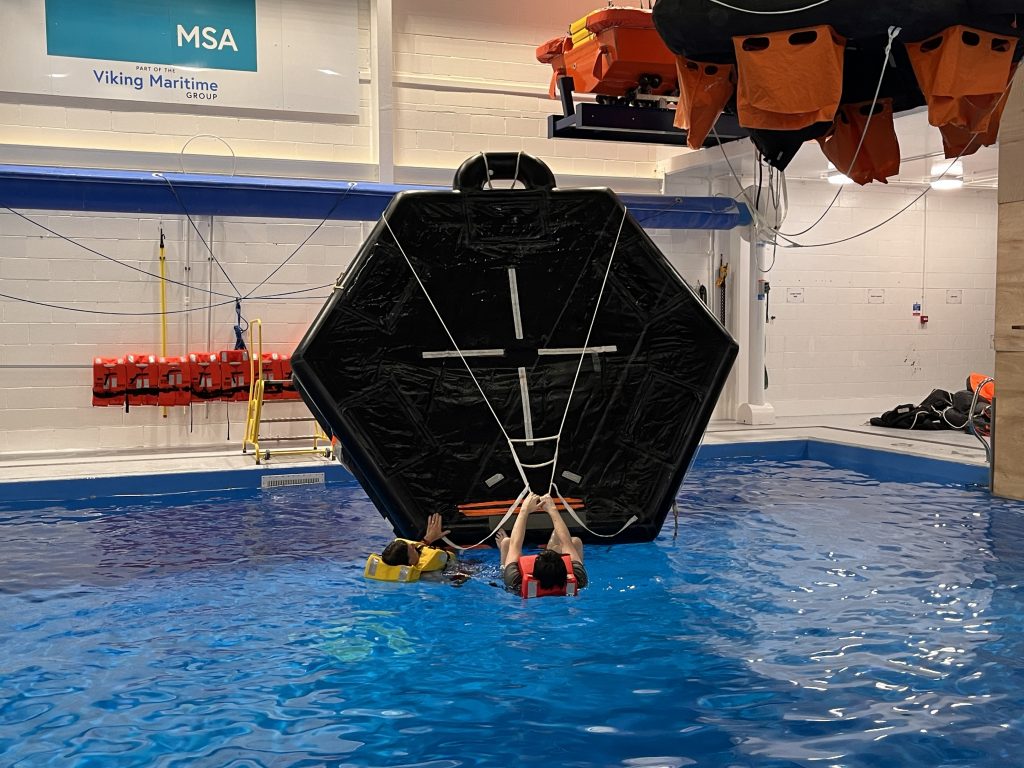
Tom in the survival pool, showing how to right a life raft that has capsized, with the life raft stood vertically on the water as tom prepares to right it | STCW Basic Safety Training

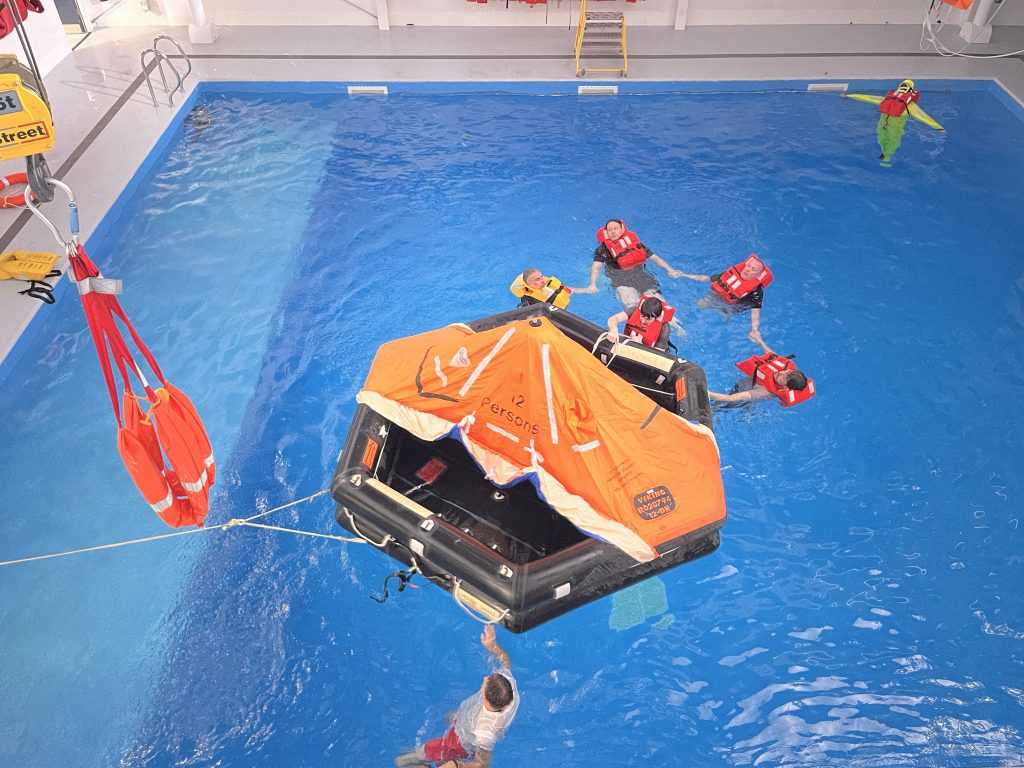
To begin the course we each had to complete a one metre jump into the water. The instructors were there to encourage us throughout and check our safety, one poolside and one in the water. We then completed a range of group exercises, swimming with an unconscious person, helping each other into the life raft, and righting a life raft.  

The essence here is teamwork; if you ask anyone who has been to sea, it will always be teamwork. The more of you that survive, the greater your chances are of being found.  

To put all our training into one final exercise, I was selected as party leader, and we were given the general emergency alarm, which is seven short blasts followed by one long one. After being given our abandon ship command by our Captain over the speakers, we had to perform all of the exercises we had practiced earlier in the day.  

STCW Basic Safety Training

Day 5 – Elementary First Aid 

I’ve received first aid training since I was about 13. Having been part of the army cadets and then working with Pegasus (a charity that provides support and services for children with a variety of severe and complex disabilities), this session was more of a refresher than a learning experience for me.  

We were fortunate to have had a delegate who had previously worked as an ambulance driver on the course, so he was keen to share some of his anecdotes, helping to build an understanding of how others react in emergency medical situations.  

We also used AEDs (defibrillators) and were able to remain cool, calm, and collected during the emergency scenarios. Even when practising in training scenarios, people become jittery because it’s quite realistic. It’s only a torso, but still, for some, it can put you on edge, especially in a classroom of peers.  

Tom performing CPR on an Annie Manikin | STCW Basic Safety Training

Which element of the week did you enjoy the most? 

My favourite part, that’s a tough question. For me, it comes down to these two: either FPFF with all the gear on and using the hoses, or during PST, as we enjoyed the fact that we were getting comfortable moving in the water with life jackets on, familiar with each other and what was being asked of us, such as locking arms and singing ‘Happy Birthday’ to keep morale up in an emergency – despite it not being anyone’s birthday! 


Has your training prepared you adequately for returning to sea? 

Absolutely. You learn everything that is set out for you to achieve. There is also a hidden curriculum that you become aware of with the trainers, with anecdotes on what not to do to encourage that you’re following the training you have been taught.  

Would you recommend the MSA to others, and if so, why? 

I would definitely. Being situated here in the southeast, you’ve got the option to complete many training courses quite close to home. Otherwise, the next closest training centre is at least a three- to six-hour drive away.  

The instructors are dedicated to staying up-to-date with the course content and ensuring they are effective teachers. The MSA is constantly pushing to deliver more unique courses to cater for everyone’s needs, so you’d be doing yourself and your career service by getting in touch with the team here.  


We’re glad to hear that Tom enjoyed his STCW Basic Safety Training, and hope to see him back at the MSA in five years’ time for his STCW refresher training, or possibly even before that, for one of our other maritime training courses.  

If you’ve recently trained at the Maritime Skills Academy, and would like to share your story, then please get in touch with our marketing team here.  

Ella Hibbert: An Update On Her Solo Arctic Circumnavigation 

Ella Hibbert is an inspirational young woman who has set herself the challenge of solo circumnavigating the Arctic. At just 27 years old, Ella will be embarking on her adventure later this spring.  

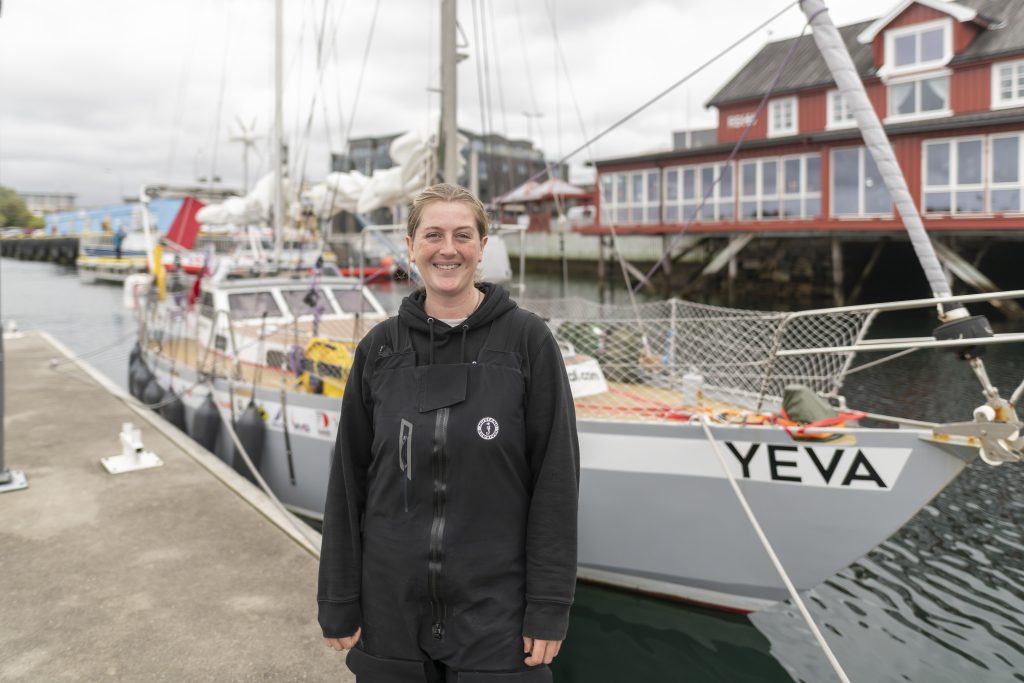
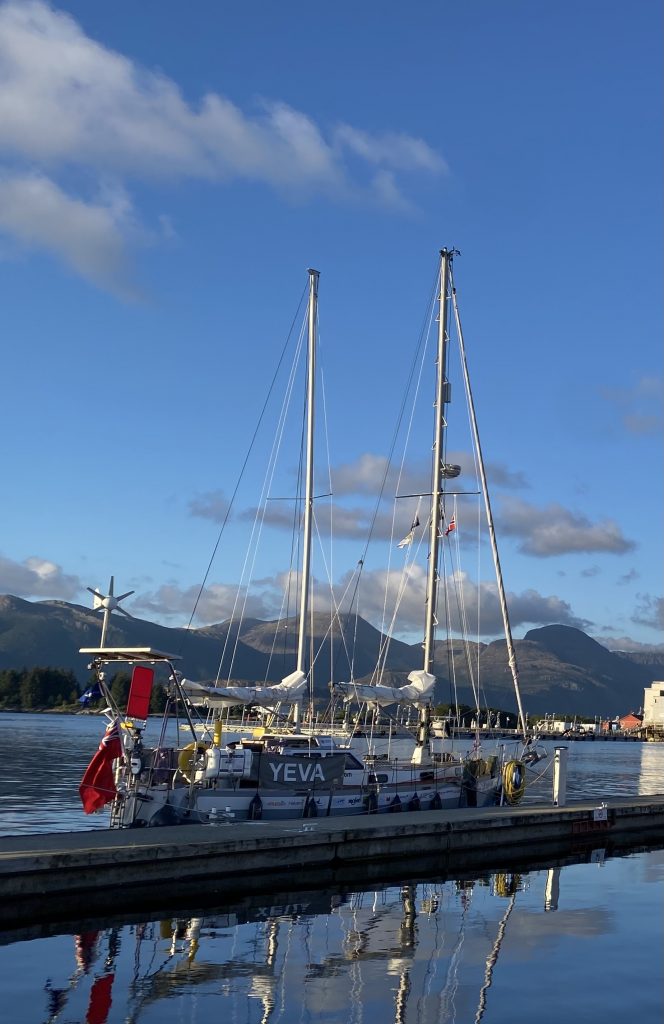
The Maritime Skills Academy has been closely following Ella’s journey as she refitted her beloved boat Yeva, and has also supported her through her rigorous training by providing Polar Code training from our Portsmouth facility back in 2023: 

“The Maritime Skills Academy has a reputation for being one of the leading training schools in 
a large variety of courses, along with boasting state-of-the-art facilities and experienced 
instructors. 

As of yet, I have not been into Arctic waters and the bridge simulator that we use during the 
Polar code training at MSA will be an incredible way of gaining knowledge about Arctic waters 
and conditions whilst still being on English soil.” 

To see how far Ella has come since her last write-up (which you can read here) she has kindly detailed her progression in her training and preparation. 


March 2025 

“Since the last piece I wrote, there has been an incredible momentum carrying my campaign to attempt the first ever single-handed Arctic circumnavigation forward.

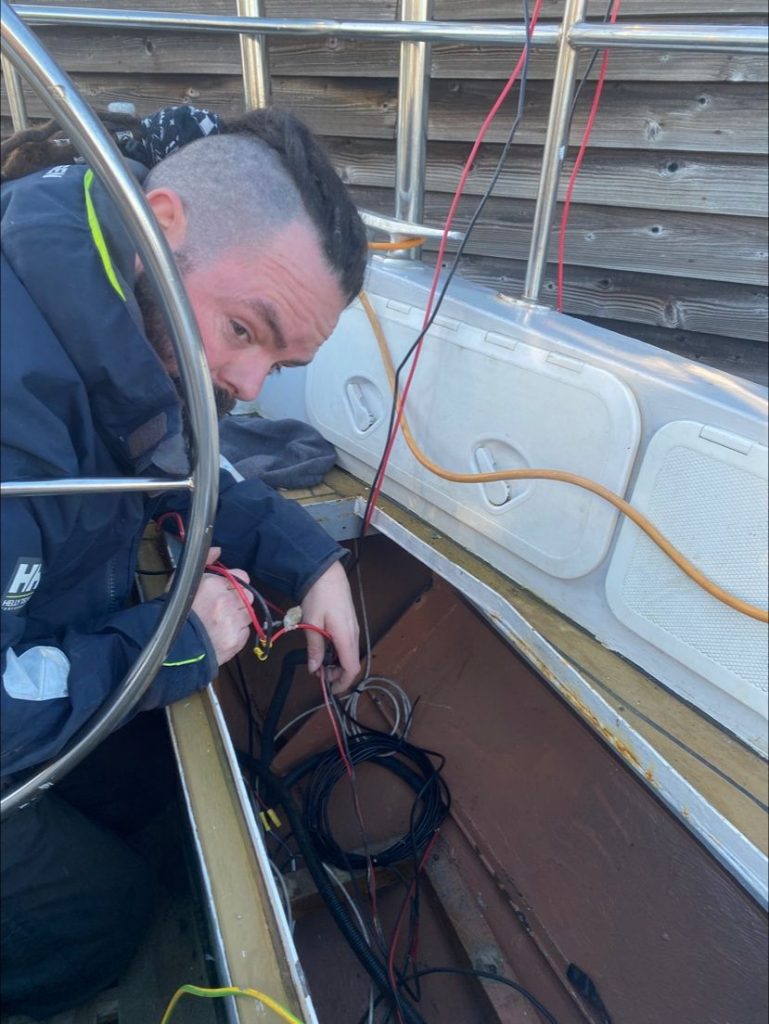
After finishing an extensive refit to my 38ft steel sailing yacht, Yeva, in June 2024, I set sail from Portsmouth to Stavanger on a sea trial, accompanied by sponsor and engineer-electrician Rick 2the Pirate” (Blackbeard Marine). After a couple of hiccups that we ironed out in Stavanger, Rick disembarked, and I continued my summer of training alone.

During this single-handed adventure, I made it all the way to the world’s most Northern settlement, deep within the Arctic Circle. Longyearbyen, Svalbard. At 78° North, Longyearbyen is much further into the Arctic than I will need to be for this year’s circumnavigation attempt and provided a wonderful training ground.

Crossing the Barents Sea (fondly referred to by sailors as the “Devil’s Dancefloor” for its renowned rough seas, as well as both endless fog and violent squalls), Yeva suffered total steerage failure and flooding. I managed to continue pumping the boat dry under hydro-vane steering, and once safely alongside (two days later), I was able to repair the boat.

I spent two fantastic weeks exploring Svalbard both by land and by sea and witnessed the wonders of the Arctic first-hand – a dream I’ve carried for many years finally coming true. I saw Arctic terns, walruses, puffins, and my favourite of all, an entire pod of beluga whales swimming up the fjord as they chased their lunch.

On the return voyage, I was star-struck by the Northern lights on multiple occasions. It was a testing outage that highlighted some issues with Yeva, which have since been resolved. Yeva has been undergoing another short refit period at the shipyard since October 2024.

I have now conducted further sea trials and am pleased with Yeva’s performance. I intend to slip lines from Haslar Marine on May 24th (weather allowing, of course, so the exact date could still change) to return to the Arctic once more, this time attempting the circumnavigation.

Over the last year, the campaign has been gaining a lot of attention – the British Scientific Exploration Society has endorsed it, and I am working closely with the International SeaKeepers Society to record the depth surroundings of the Arctic seabed as I go – information not yet readily available on published charts. I have also been invited to make a pre-recorded video explaining what I am doing and why, which will be played at the United Nations Ocean Conference in Nice on June 8th. It’s a huge honour. 

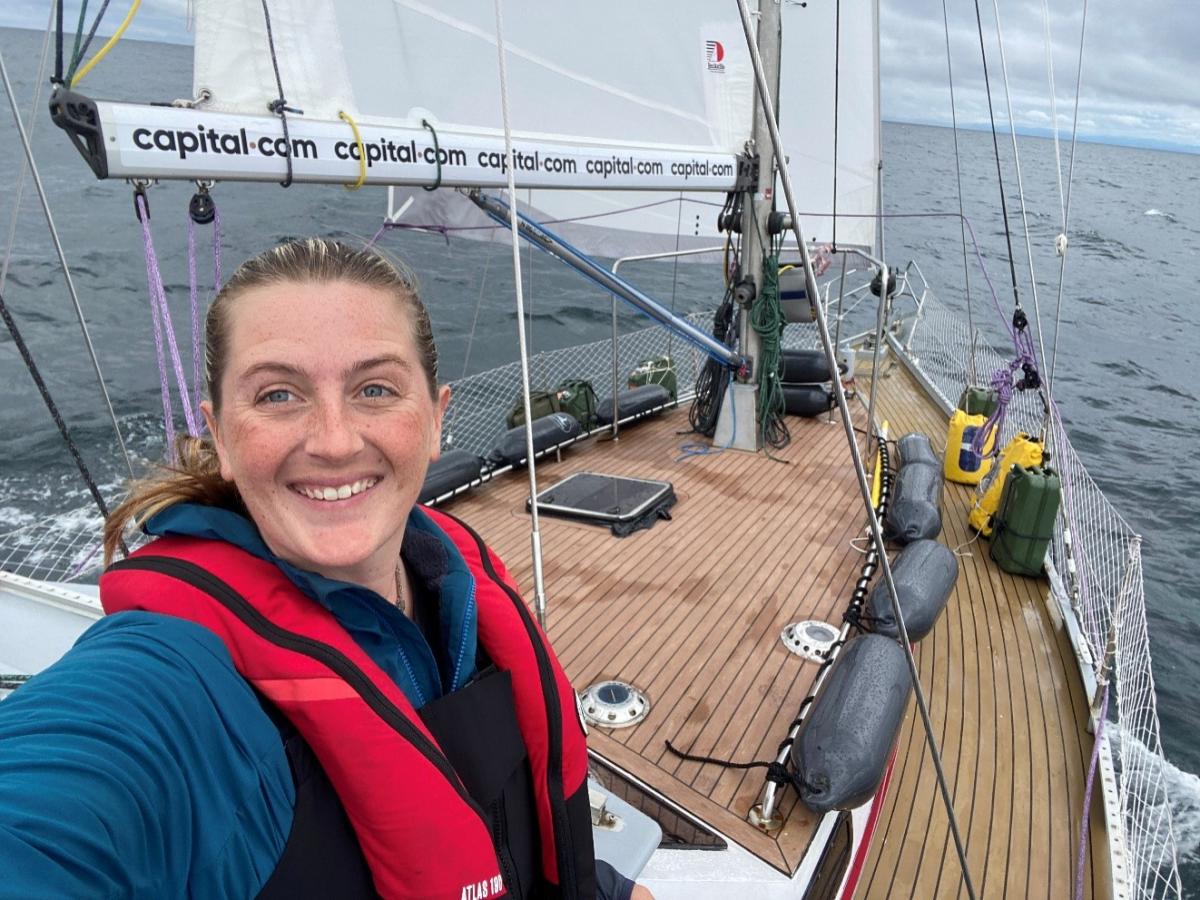
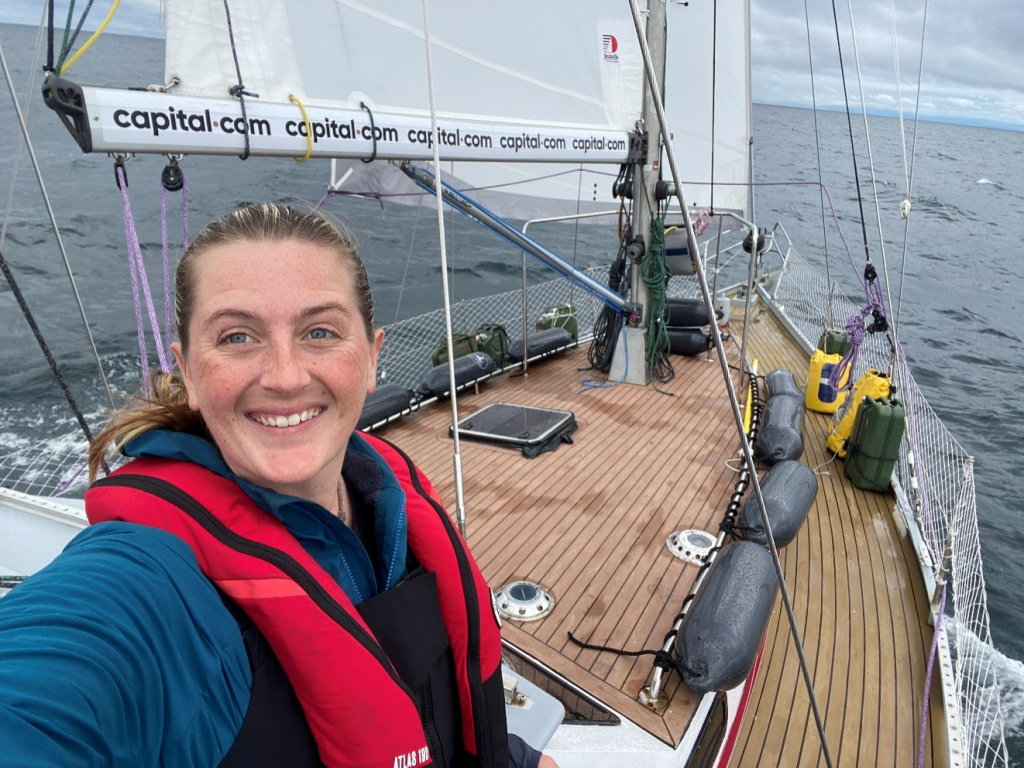
Ella Hibbert smiling in a selfie on board her boat Yeva

As I gear up to go over the next two months, the jobs list on board is gradually slowing down, and I am able to set aside some time to rest and see family and friends. But I am, on the other hand, counting down the days until departure – and I feel ready!

“When I return from my circumnavigation, S/Y Yeva will be put up for auction, with all proceeds from her sale being donated to both Polar Bears International and Ocean Conservancy, enabling these two incredible charities to continue their hard work in preserving and conserving the Arctic. 

If you’d like to follow along on my voyage, please visit my website, YouTube channel, and social media pages, all under the name ‘Ella in the Arctic‘. There will also be a live tracker on board, so you’ll be able to follow my progress in real time. Thank you!”  

We will certainly be following the rest of Ella’s journey as she sets off on her incredible feat, and you can be involved too!

Ella is accepting letters, notes of encouragement, poems, and photographs so that she can have something to read when feeling low and tired. If you’d like to be a small part of this amazing adventure and help Ella achieve her goal, you can send your contributions before the deadline of May 18th to:

Ella Hibbert
Haslar Marina
Haslar Road
Gosport
PO12 1NU

We wish you the best of luck, Ella, and can’t wait to see how the rest of your progress goes!