
Watchkeeping and Bridge Navigational Safety | 5 ways to prevent collision

The latest MCA Safety Spotlight (July 2025) shines a harsh but necessary light on the ongoing risks linked to poor bridge watchkeeping practices. Despite advances in technology and regulation, collisions, groundings, and serious accidents are still occurring due to preventable human errors.

Numerous factors can impact the safety of bridge operations, including fatigue, distraction and misuse of equipment. In accordance with the MCA safety spotlight, vigilance, leadership, and discipline are the makings of good seamanship. 

 1. Fatigue Is More Common Than We Think

Fatigue is one of the most underestimated risks at sea. It creeps in quietly, reducing concentration and reaction times without the watchkeeper realising. Many recent accidents—highlighted in the MCA’s case studies—can be traced back to an overworked or poorly rested crew, sometimes due to commercial pressures or insufficient manning levels.

What can help:

  • Ensure accurate records of working and rest hours are maintained, in compliance with STCW and ILO conventions.
  • Masters should have the authority and company backing to refuse unsafe watch schedules.
  • Implement practical fatigue management strategies, including rotating watches to allow proper rest.
  • Promote open reporting of fatigue without fear of blame.

Key takeaway: A well-rested watchkeeper is sharper, safer, and far more effective than a tired one.

2. Keep Distractions to a Minimum

The MCA warns that mobile phones, personal tablets, and non-navigation tasks are increasingly cited as factors in collisions and groundings. In Case 1 of their recent investigation, a fatal collision occurred due to a watchkeeper being distracted by a personal tablet and having consumed alcohol hours before the watch.

Watchkeeper on bridge talking on walki talki

What can help:

  • Enforce “no personal device” policies during bridge duty.
  • Establish clear bridge discipline—navigation comes first, always.
  • Conduct regular briefings on the risks of distractions and complacency.
  • Make use of bridge resource management (BRM) techniques to keep focus on tasks.

Key takeaway: Navigation requires 100% attention. Staying focused on the task at hand makes all the difference.

3. Watchkeeping Technology Is a Tool, Not a Replacement

Bridge technology—radar, ECDIS, and BNWAS—has significantly improved maritime safety, but it cannot replace a lookout. The MCA has found that navigational aids are sometimes muted, set incorrectly, or relied upon without cross-checking with other methods.

What can help:

  • Ensure radar and ECDIS alarms (CPA, zones) are set appropriately for the vessel’s environment and traffic conditions.
  • Train officers not just on how to use these systems, but why settings matter.
  • Cross-verify electronic data with visual lookout and manual plotting.
  • Test BNWAS and other alarms to ensure they’re functioning correctly.

Key takeaway: Technology supports safe navigation—but only when used as part of a layered safety approach.

4. Continuous Training Is Essential

The STCW convention sets the standards for watchkeepers and their qualifications. However, to achieve a high level of competency and safety, watchkeepers should participate in ongoing training, practice and refresher courses. With complacency and outdated knowledge continuing to play a huge role in navigational errors.

Watchkeepers training on bridge simulator

What can help:

  • Refresher training on COLREGs, Bridge Resource Management (BRM), and radar/ARPA systems.
  • Simulator-based exercises to rehearse collision avoidance and emergency scenarios.
  • Peer-to-peer learning onboard to ensure everyone understands procedures.
  • Make training a regular conversation, not a box-ticking exercise.

Key takeaway: Ongoing professional development is the difference between knowing the rules andapplying them instinctively under pressure.

5. Leadership and Culture Make the Difference

As figures of authority and an example for the rest of the crew, Masters, officers, and company leaders must promote a safety-first culture where proper watchkeeping is maintained. The MCA’s case studies show that weaker leadership and commercial pressures often result in best practices being overlooked.

Watchkeeper and engineer on bridge looking out the window

What can help:

  • Embed watchkeeping standards into your Safety Management System (SMS).
  • Provide Masters with clear backing from shore management to enforce proper manning and rest periods.
  • Invest in leadership training to reinforce standards onboard.
  • Encourage open reporting of near-misses without fear of blame—this builds a culture of learning.
  • Demonstrate leadership by walking the talk—prioritising safety over speed or cost.

Key takeaway: A strong safety culture, supported by leadership, prevents the erosion of standards.

At The Maritime Skills Academy, we see these lessons as a positive opportunity to keep improving how we train and support watchkeepers. By blending technology, good habits, and strong teamwork, we can create safer, more efficient bridges. What may seem like a small step in developing a skillset will have a much larger impact on the industry, resulting in less incidents and casualties, globally.

If you’d like to learn more about how our training programmes—including Bridge Resource Management and COLREGs refreshers—can help your team, get in touch with us.

5 Steps to Staying Afloat | Drowning Prevention Day 2025

The purpose of Drowning Prevention Day is to raise awareness and inform others on the life-saving steps you can take to prevent drowning.

Taking place on the 25th of July, Drowning Prevention Day aligns with the start of the summer holidays, a time when thousands flock to the coasts and swim in the sea.

Lifeguard enforcing drowning prevention on a busy beach
Credit: RNLI

A tragic average of 300,000 people, globally, drown annually, a statistic that is far too high. In an attempt to reduce the excessive number of drowning casualties, this national day teaches individuals how to survive and save their peers.

The 2025 Drowning Prevention Day Focus

At the Maritime Skills Academy, we are focusing on RNLI’s excellent “Float To Live” campaign and reinforcing the steps individuals can take if they do find themselves starting to drown.

Boy starting to drown at sea

Whether you are swimming in a pool or in the sea during the summer, there should always be a trained safety professional nearby. Lifeguards, Coastguards, and the RNLI are always on call to deal with drowning emergencies. However, depending on the tide, how far from shore you are and how busy the area is, rescue can take time. It is important to be prepared to remain calm and wait.

Here we will cover the key steps to staying afloat and what you should do if you panic and begin to drown.

What to do if you start drowning

  • Relax: As difficult as this may seem at the time, relaxing your body will increase buoyancy and conserve your energy. Especially in colder waters, it’s incredibly crucial that you conserve your energy by moving as little as possible.
  • Keep your face above the water with your ears submerged: When you begin drowning, the main focus is keeping your nose and mouth above water, keeping your airways clear.
  • Keep your arms beneath the surface and move them in small circular motions: Having your arms break the water’s surface will increase your chances of becoming submerged. Performing small circular motions with your arms will act as a form of treading water and will shift the focus from panic to.
  • If you can, raise your arm and signal for help: During the summer, the coastguard and lifeguards will be on the lookout for incidents, but also the busy beaches means that you’re more likely to be spotted. So, if you are unable to lift your arm or signal for help, it may only take a little longer for the situation to be noticed.
  • Try to swim to safety: Even the strongest of swimmers can find themselves in trouble in the water, but it’s vital that you point your head towards safety and continue with circular arm motions beneath the water, helping you to drift in the right direction.

Our Mission at the MSA

Our purpose at the MSA is Setting New Standards Together. Our training is specifically designed to improve the safety of seafarers both during their roles onboard and in the event of emergencies ashore.

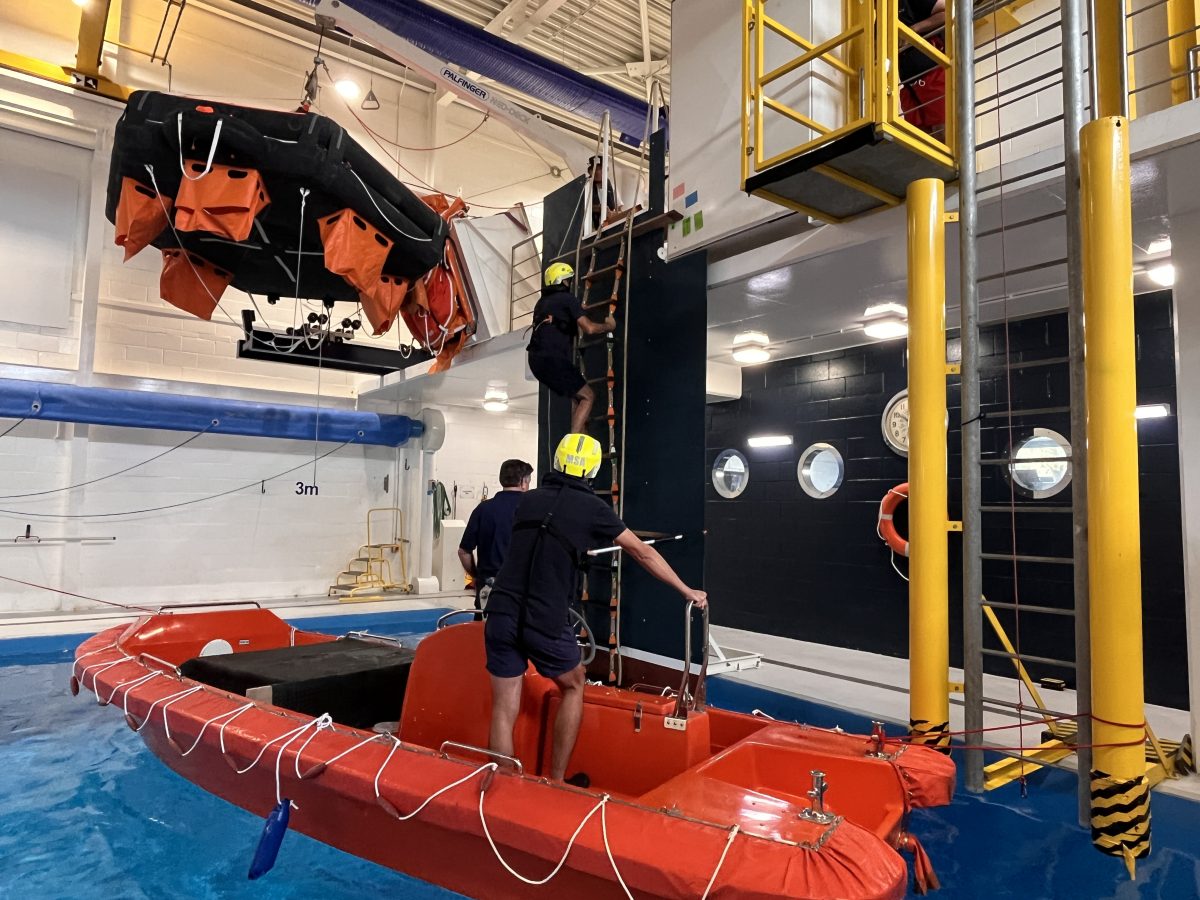
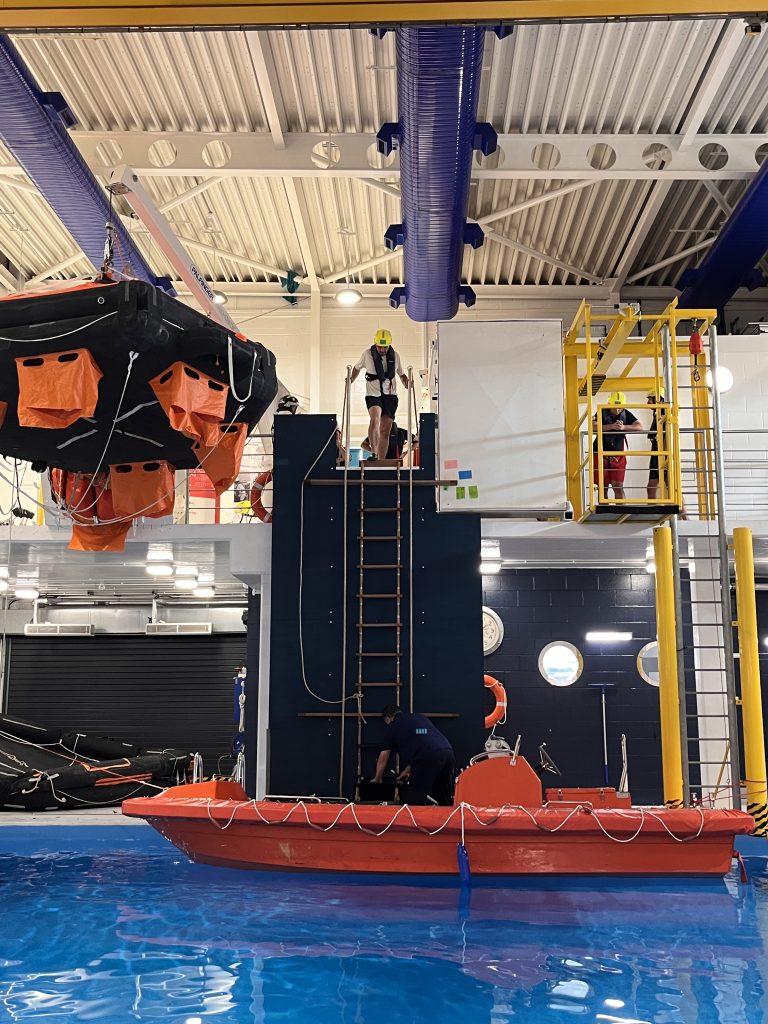
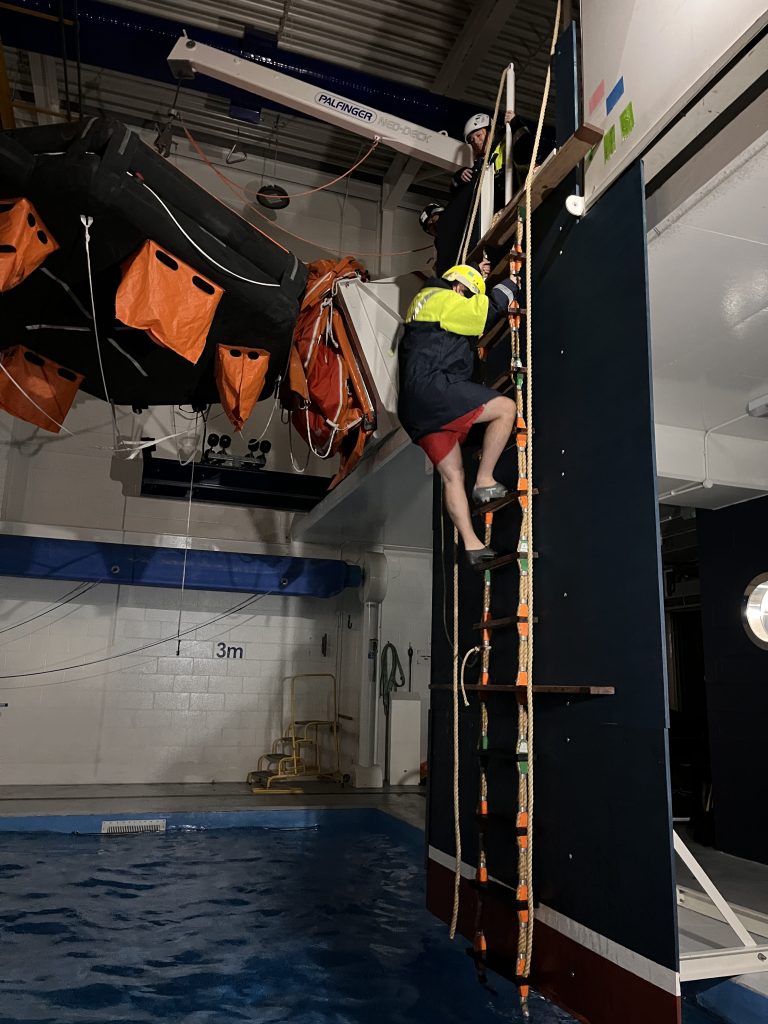
people on a rescue drill at an indoor pool

As part of the STCW Basic Safety Training course, our expert instructors teach Personal Survival Techniques (PST). This course trains delegates to be prepared for an abandon ship scenario. Using our full weather simulation survival pool, we can train crew to survive in the water, upright life rafts, rescue casualties, and make their way to safety.

If you are interested in participating in a Personal Survival Techniques course, contact us today to find out more.

The Importance of Leadership Training for Crew On Board Ships  

Leadership training ensures that industry leaders’ skills and knowledge are up-to-date and of a high standard. With over 90% of trade goods being transported by sea, having strong leaders who can enhance crew efficiency is essential in the operation of modern global trade.  

Despite the maritime industry’s extensive technological advancements, it remains dependent on the crew that operate its vessels. The importance of crew members means safeguarding and seafarer support remain indispensable. 

Ensuring Safety at Sea  

It is the role of industry leaders to maintain safety on board the vessel they are responsible for. Leadership training ensures officers and other leaders can enforce safety regulations and maintain vessel company culture, even in emergencies. 

In the event of an emergency, crew members will look to their leaders for guidance and instructions.  

With leadership training, leading crew members will be well-equipped with the skills they need to keep their team calm and proactive in emergency situations. If crew members trust their superiors to handle high-pressure situations effectively, onboard morale will naturally increase.  

Enhancing Teamwork and Morale  

Efficient leadership teams should encourage teamwork and regular activities among crew to promote strong onboard relationships. A seafarer’s job can be stressful from time to time; having to face extended periods away from home, confined spaces, and potential feelings of isolation. However, having access to leadership figures can increase motivation and alleviate the concerns of crew. Strong and reliable leadership has proven to sustain high morale on board and therefore is crucial for the overall outcome of a crew’s mental well-being.  

Improving Operational Efficiency On Board 

Trained vessel leaders are taught how to organise and prioritise tasks, delegate responsibilities, and monitor performance effectively. Having organisational skills and being able to enforce this on board will improve the running of daily operations, minimise downtime and reduce operational costs.  

Adapting to Technological Advancements  

Technological advancements are constantly being introduced on board vessels, and crew are increasingly being required to learn and use new systems. Leadership training teaches officers problem-solving and adaptability, enabling them to guide and mentor their teams through the introduction of new systems and technologies.  

Having educated leaders on board your vessel reduces the risk of neglecting technological advancements and ensures adherence to industry best practices.

Compliance with Regulations and Standards  

One way to maintain safety amongst leaders is to follow regulations. At the Maritime Skills Academy, we offer initial and refresher training in industry-standard certifications. Standards of Training, Certification, and Watchkeeping (STCW) for Seafarers is a regulated certification that ensures all seafarers are competent and prepared to respond to emergencies.  

External shot of the Maritime Skills Academy

The International Maritime Organization (IMO) is a regulatory body that enforces adherence to industry requirements. Leaders on board a vessel need to have training that supports their job functions to ensure they are confident and qualified to support the safeguarding of their team. 

Core Components of Maritime Leadership Training  

Our leadership training for maritime professionals includes:  

  • Emotional intelligence: Leaders who are self-aware and understand the impact of their personality and behaviours on others are better at engaging with their teams. 
  • Decision-Making Skills: By simulating real-world scenarios, our training helps leaders make quick decisions in high-pressure situations. 
  • Communication: By teaching clear, concise, and respectful communication practices, our leadership training helps to build a structured and communicative ethos. 
  • Conflict Resolution: Our leadership training equips participants with strategies to resolve disputes amicably and maintain harmony onboard.  
  • Crisis Management: Our bespoke facilities simulate real-world scenarios to prepare leaders to handle emergencies such as fires, equipment failures, and medical issues. 
  • Cultural Sensitivity: Educating leaders on cultural differences to enhance their understanding and cooperation in multicultural team environments. 

By prioritising leadership training, the maritime industry can navigate the challenges of today and chart a course for a more secure tomorrow. It’s no secret that people are the drivers of maritime operations, and supporting crew continues to be as significant as ever.  

In partnership with BZ Maritime Leadership, the Maritime Skills Academy is pleased to deliver Maritime Leadership Training

BZ Maritime visit MSA Dover to announce the introduction of leadership training partnership

Providing a range of leadership development and human capability training for professionals operating in both on board and shoreside roles. Our training equips professionals with leadership and human capabilities to perform safely and excel in their roles. 

Training will upskill less experienced leaders and crew, while also accelerating the professional growth of those who are already well-practised or more advanced in their career journeys.  

To find out more about our Maritime Leadership Training get in touch with our team today to learn more info@vikingmsa.com