Entry into Enclosed Space: 5 Responsibilities of Safety and Senior Officers

Building on the vital discussions from the 2025 Joint Industry Workshop and the UK Chamber of Shipping Safety Culture Conference, it is clear that addressing the risks of entry into enclosed space requires more than awareness – it requires hands-on competency, clear responsibilities, and leadership at the officer level.

Safety officers are responsible for ensuring the ship’s crew is prepared to face emergencies in enclosed spaces. This includes maintaining a safety culture onboard and enforcing industry safety procedures.

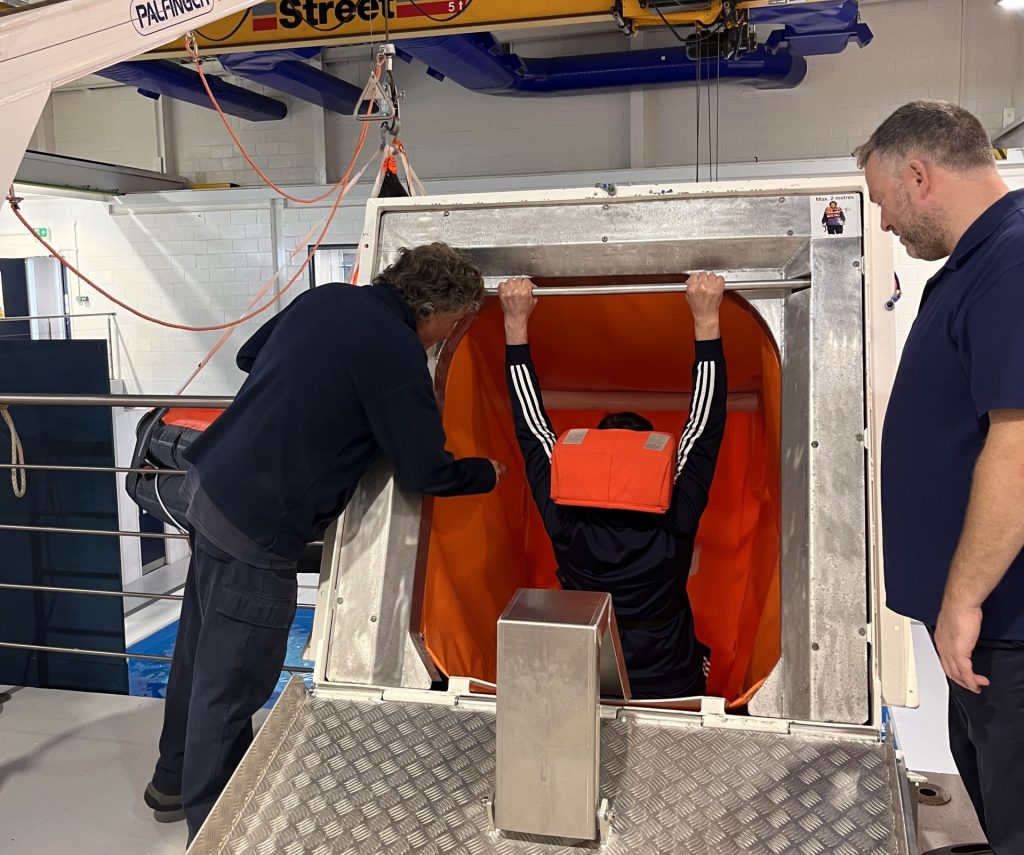
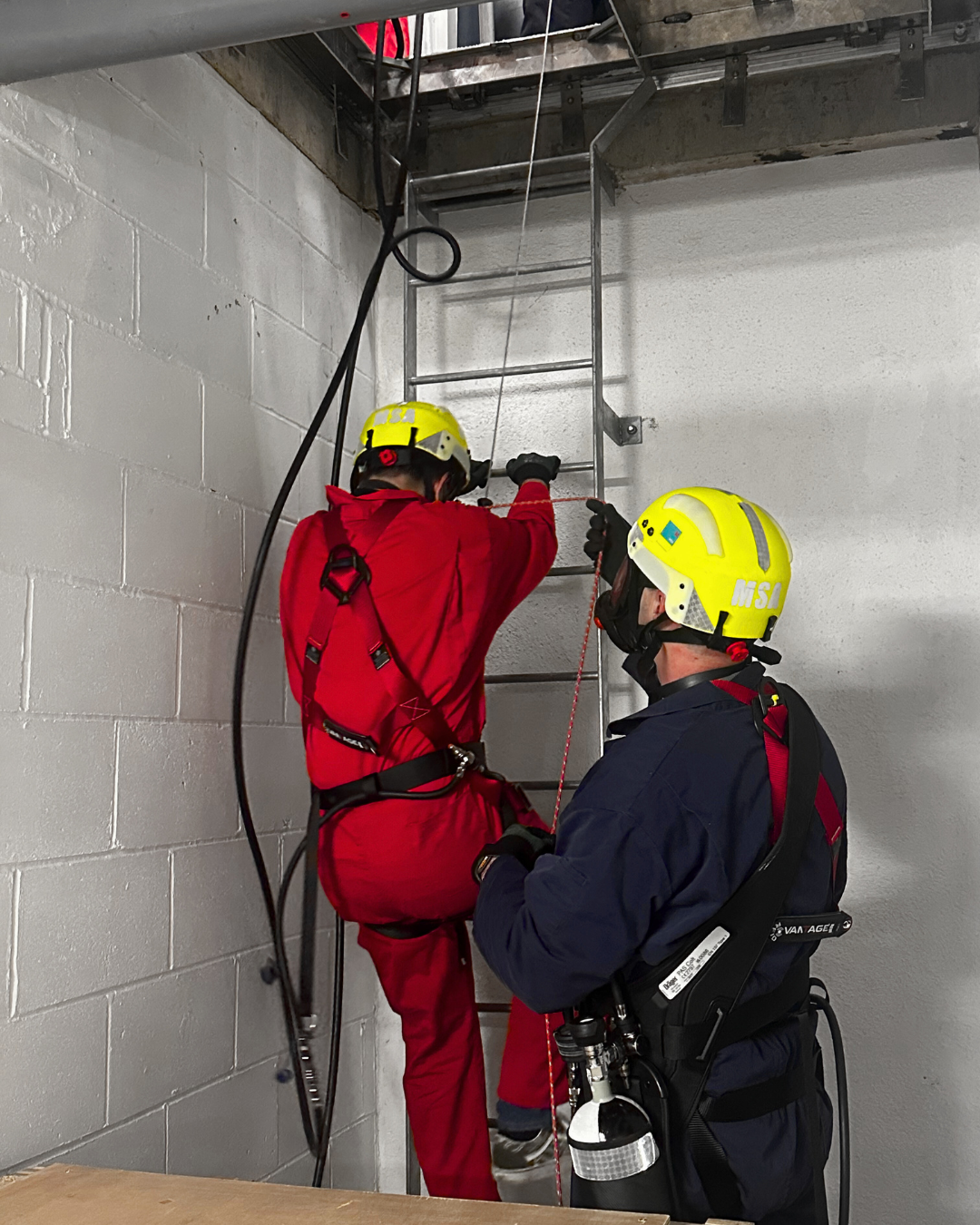
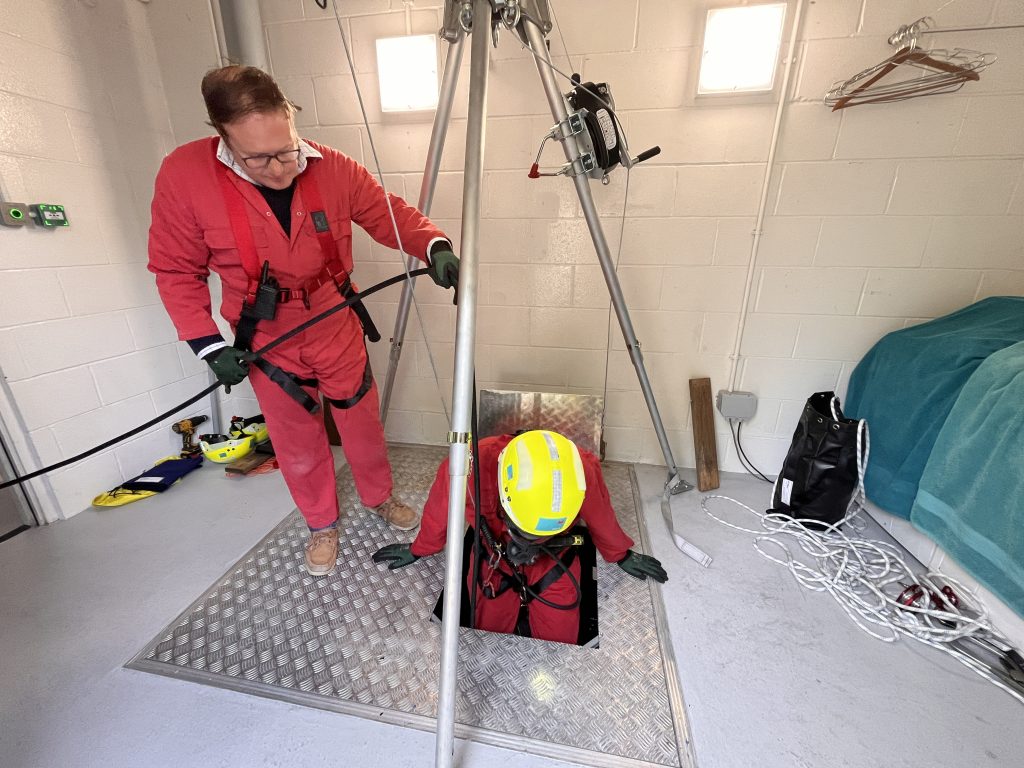
three delegates gathered around small trap door preparing for enclosed space entry

Senior Officers’ Safety Responsibility

1. Lead by Example.

Having a Senior Officer who is proactive and educated on industry regulations will encourage crew members to follow suit. Make safety procedures a key topic when onboarding new crew, creating presentations and upskilling to continue the reinforcement of the importance of safety.

2. Coordinating Rescue Plans

Rescue planning must be part of any entry into enclosed space operation. Safety officers should be able to:

  • Have a written rescue plan prepared before entering an enclosed space.
  • Identify and brief the standby team.
  • Make sure rescue equipment is readily available on board. This includes harnesses, retrieval lines, and stretchers.
  • Confirm the presence of a working oxygen resuscitator and emergency breathing apparatus.

3. Risk Evaluation and Atmosphere Testing

The officer must oversee pre-entry atmosphere checks using calibrated multi-gas detectors to monitor oxygen levels, flammable gases, and toxic vapours. The officer should continue monitoring throughout the operation.

4. Use of the Oxygen Resuscitator

An oxygen resuscitator must be readily accessible, and its use must be familiar to at least two crew members at all times. Oxygen resuscitator safety should be maintained by:

  • Operating procedures for oxygen resuscitation devices.
  • CPR in conjunction with oxygen delivery.
  • Weekly inspection and maintenance checks to ensure readiness.

5. Training and Drills

Safety officers are responsible for running entry into enclosed space drills. These should reflect realistic conditions, including:

  • Time-limited rescue scenarios.
  • Communications drills with the bridge and standby teams.
  • Deployment and operation of recovery equipment.

Creating Competent Leadership Through Practical Training

Effective enclosed space management depends on more than technical knowledge. Officers must be trained in leadership and communication, ensuring crew understand not only the ‘how’ but also the ‘why’ behind each safety step.

Training programmes should include:

  • Tabletop exercises with scenario-based decision-making.
  • Peer review of recent enclosed space entries and near misses.
  • Simulation-based practical assessments.

Safety officers and senior crew have a critical responsibility in the successful planning, execution, and emergency management of entry into enclosed spaces. With practical and scenario-based training, we can begin to maintain the safety of the crew. Training reinforces the safety ethos, reduces risks and saves lives.

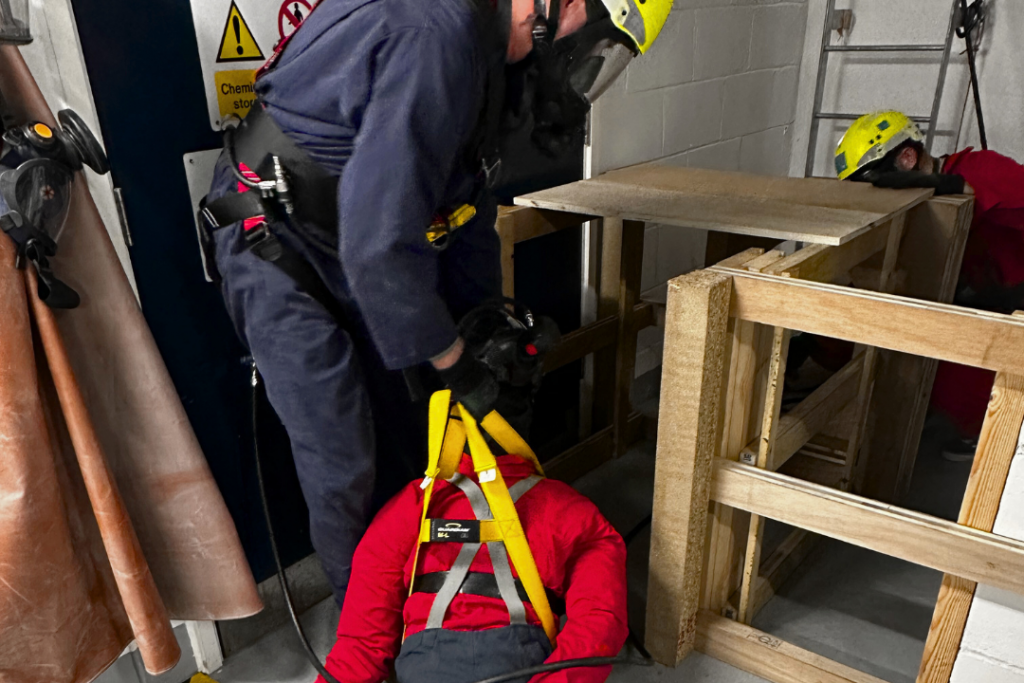
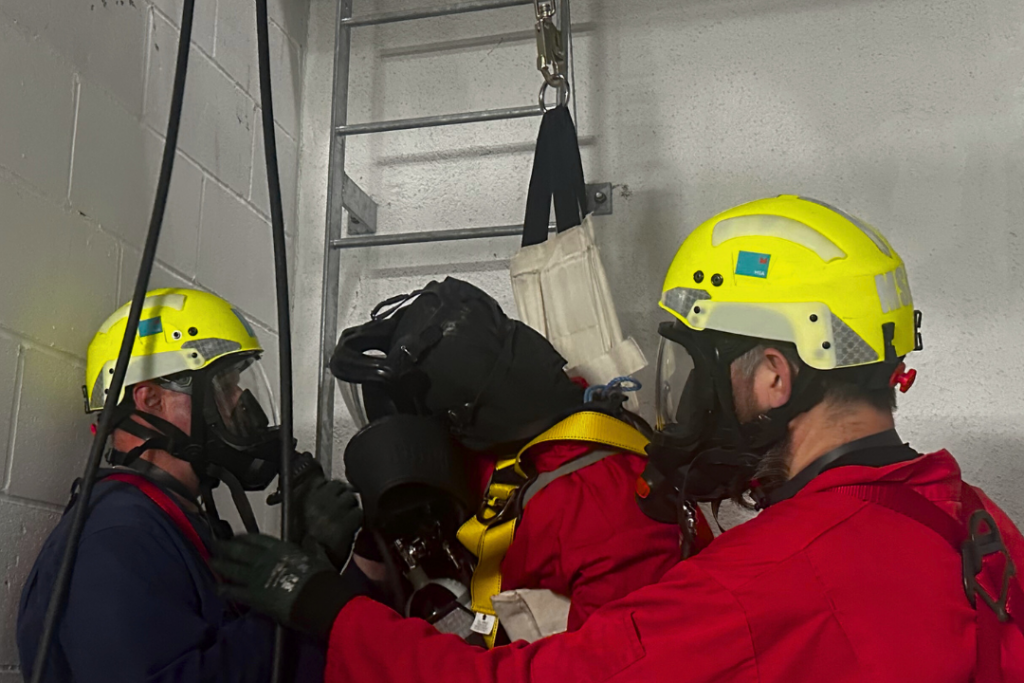
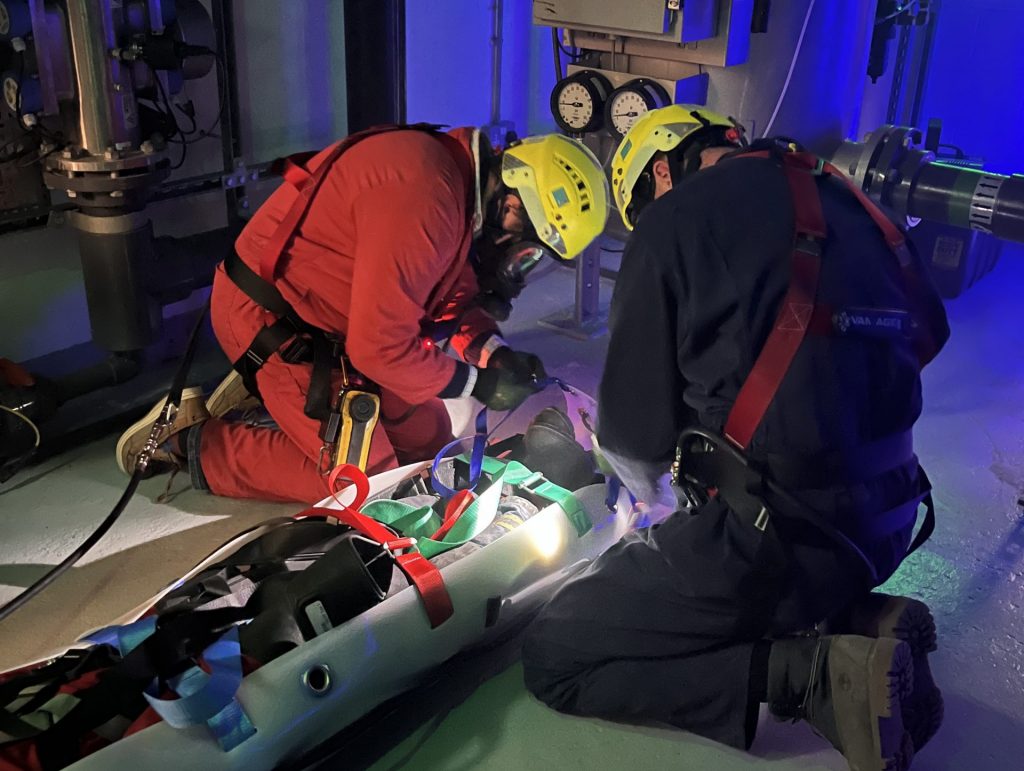
two delegates recovering casualty as part of an entry into enclosed space courses

The Maritime Skills Academy offers an MNTB Entry into Enclosed Space training course, which we can tailor to meet the company’s procedures. These sessions, which usually run over three days, will provide officers and crew with the necessary skills to evaluate risks correctly, create safe rescue plans, and gain a better understanding of the hazards and emergency precautions when entering enclosed spaces.

With course availability for 2026, you can book here. 

Maritime Skills Academy Announces Strategic Partnership with BZ Maritime Leadership to Deliver Bespoke Maritime Leadership Training 

The Maritime Skills Academy (MSA), a leading provider of maritime training and simulation, is proud to announce a new strategic partnership with BZ Maritime Leadership, specialists in developing leadership and human capabilities in the maritime sector. This collaboration will provide high-impact leadership training programmes tailored specifically for maritime professionals worldwide. 

BZ Maritime Leadership and MSA mission

With a shared vision of raising standards across the industry, the MSA and BZ Maritime Leadership are combining their expertise to offer a unique suite of courses that focus on enhancing leadership and human capability development capabilities at sea and ashore. The training will cover critical areas, including emotional intelligence, decision-making, team management, crisis leadership, and communication, all tailored to the unique demands of the maritime environment. 

Mark Jaenicke, Operations Director at the MSA, said: 

“Strong leadership is key to staying safe and working efficiently at sea. Teaming up with BZ Maritime Leadership means we can offer powerful training that builds confidence in people and help organisations succeed in today’s challenging maritime world.” 

Karl Santrian, Co-Founder of BZ Maritime Leadership, added: 

“BZ Maritime Leadership are delighted to be teaming up with the MSA as together we recognise that leadership effects every activity and outcome onboard.  Our joint programmes will elevate leadership and human capabilities with the aim of inspiring a culture of excellence in maritime safety and operations.  Focused on practicality and the unique nature of leadership and teamwork at sea, the training will have an enduring impact that will provide a great return on investment.”

Training will be available in-person, onboard, online or blended to accommodate the diverse needs of our global maritime clients. This partnership strengthens both organisations’ commitment to safety, performance, and continuous development in the maritime sector. 

For more information about the Maritime Leadership Training programmes, visit our Leadership Training Page

External shot of the Maritime Skills Academy now in partnership with BZ Maritime

The Maritime Skills Academy, part of Viking Maritime Group, has been a maritime leader in STCW training since 2016, providing delegates near and far with the necessary training to work at sea. 

With training centres in Dover, Portsmouth, and Gibraltar, they offer flag state-recognised courses to over 5,000 delegates annually. 

BZ Maritime Leadership specialise in maritime consultancy, leadership development, and human capability training and support.  The founders, who had successful careers as officers in the British Royal Navy, also have extensive experience delivering Leadership and Human Capability training in the maritime domain including shipping, cruise, and superyacht sectors.

All of BZ’s Training Consultants are former maritime leaders, hold high level professional qualifications, and have considerable expertise in delivering maritime leadership training.


What is STCW Basic Safety Training? | Train at MSA

Maritime Skills Academy delegate Thomas Bishop is soon joining Windstar Cruises as a third engineer after completing his cadetship a few months ago.  In order to work on board, Tom had to complete his STCW Basic Safety Training. But what does that mean? 

STCW Basic Safety Training for delegate Thomas Bishop | Image of Tom in full fire protective gear, holding his thumbs up to the camera

As a legal requirement, before you work at sea, you must complete four training courses that make up the 4-Part Basic STCW certificate. This includes Fire Prevention and Firefighting (FPFF), Personal Safety and Social Responsibilities (PSSR), Personal Survival Techniques (PST), and Elementary First Aid (EFA). 

After having completed his week of training, we caught up with Thom to find out how it went and how he feels it has prepared him for the next step in his career. 

Day 1 – Fire Prevention & Fire Fighting  

As someone who doesn’t play with fire, FPFF was a really good way to feel comfortable around fire by learning to use the equipment safely and being shown the proper methods of extinction, with explanations as to why we were doing it.  

In the first practical, we demonstrated how to use a fire blanket to put out a grease pan fire effectively. I think many of the delegates, who were experiencing firefighting for the first time, were amazed at how little effort it takes to put out a fire, but still the whole point of the course is not to underestimate dealing with fire, especially on board.  

With the fire extinguishers it was essential to practice using the equipment, such as testing them to ensure they work. So, when we’re doing he exercises, with the doors were open, and the fire raging, the instructors demonstrate how to make the most effective use of the fire extinguisher. You get to see how the fire behaves when it’s being actively attacked, and how it can reignite, and when it’s likely to reignite.  

Day 2 – Fire Prevention & Fire Fighting

On the fire training ground, we had a cold walkthrough, so we suited up and had a practice run with no fire, spotting early dangers, as it was still quite dark in the containers. Then, the instructors would break down the manoeuvres we would need to use, so we had the chance to practice and build some teamwork before going into the real thing: making sure you’ve got contact with the wall and the person at the front at all times, how to sweep properly, entry checks, remembering to check your pressure gauge before going in, complete the on-scene commander’s request, whether a search and rescue or fighting a fire.  

Tom and fellow delegates demonstrating how to safely enter a room with a fire, holding on to each other's shoulders | STCW Basic Safety Training

Afterwards, we were given feedback from the instructors before heading back in with a real fire. This is when it gets more interesting as it is hot in there, and nobody wants to be in there for too long! You’re exerting yourself, and the hotter you are, the harder you’re breathing, and the faster you’re getting through your oxygen.  

It was an excellent exercise to see it all in action when the fire was going. Unless you’ve been in a fire emergency before, this is the next best thing. The instructors are there with you, so if there are any issues, you’ve got an expert who will immediately be able to assist as needed, and you feel like you’re in safe hands.  

Tom and other delegates stood on a balcony all smiling and holding thumbs up to the camera

Day 3 – Personal Safety & Social Responsibilities  

Anyone who’s ever completed PSSR will know it’s not the most riveting course– yet the instructors here are quite a funny bunch and always find a way to tell you a funny or silly story – that is always relevant to keep you interested. There’s nothing worse than a ‘death by PowerPoint’. However, these instructors have successfully delivered an engaging class on PSSR.  

Day 4 – Personal Survival Techniques 

PST was also excellent. We were shown how to don a life jacket correctly —and had a challenge in which we had to put them on in under a minute (this is the standard time expectancy for donning a life jacket). We then tried donning the immersion suits, for which I now hold the record for the fastest time to put one on, at 1 minute and 5 seconds. 

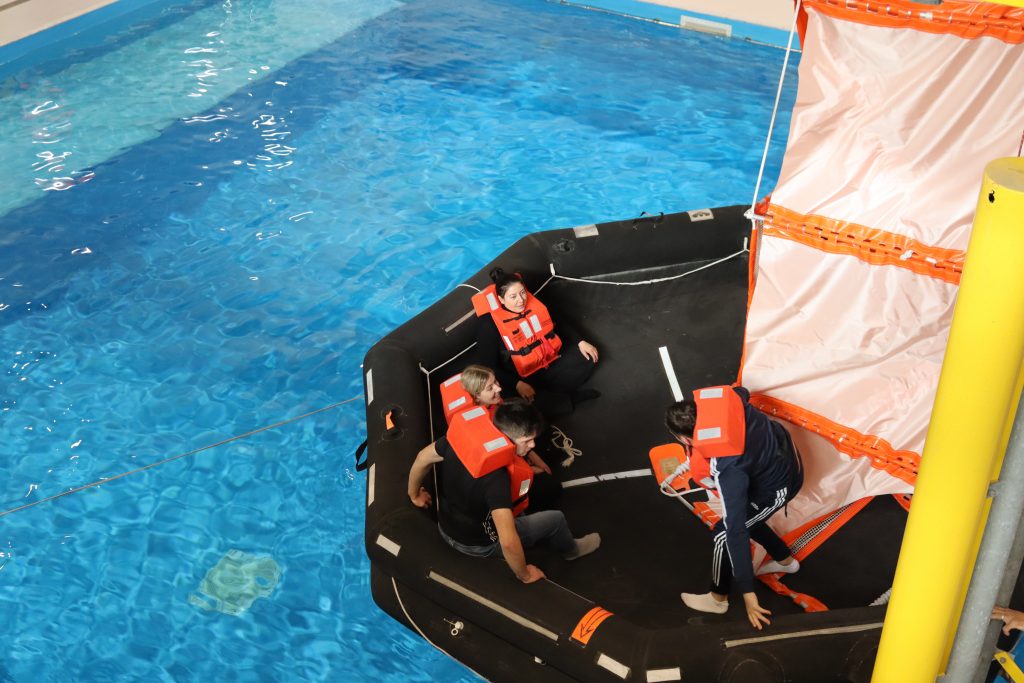
Tom in the survival pool, showing how to right a life raft that has capsized, with the life raft stood vertically on the water as tom prepares to right it | STCW Basic Safety Training

To begin the course we each had to complete a one metre jump into the water. The instructors were there to encourage us throughout and check our safety, one poolside and one in the water. We then completed a range of group exercises, swimming with an unconscious person, helping each other into the life raft, and righting a life raft.  

The essence here is teamwork; if you ask anyone who has been to sea, it will always be teamwork. The more of you that survive, the greater your chances are of being found.  

To put all our training into one final exercise, I was selected as party leader, and we were given the general emergency alarm, which is seven short blasts followed by one long one. After being given our abandon ship command by our Captain over the speakers, we had to perform all of the exercises we had practiced earlier in the day.  

STCW Basic Safety Training

Day 5 – Elementary First Aid 

I’ve received first aid training since I was about 13. Having been part of the army cadets and then working with Pegasus (a charity that provides support and services for children with a variety of severe and complex disabilities), this session was more of a refresher than a learning experience for me.  

We were fortunate to have had a delegate who had previously worked as an ambulance driver on the course, so he was keen to share some of his anecdotes, helping to build an understanding of how others react in emergency medical situations.  

We also used AEDs (defibrillators) and were able to remain cool, calm, and collected during the emergency scenarios. Even when practising in training scenarios, people become jittery because it’s quite realistic. It’s only a torso, but still, for some, it can put you on edge, especially in a classroom of peers.  

Tom performing CPR on an Annie Manikin | STCW Basic Safety Training

Which element of the week did you enjoy the most? 

My favourite part, that’s a tough question. For me, it comes down to these two: either FPFF with all the gear on and using the hoses, or during PST, as we enjoyed the fact that we were getting comfortable moving in the water with life jackets on, familiar with each other and what was being asked of us, such as locking arms and singing ‘Happy Birthday’ to keep morale up in an emergency – despite it not being anyone’s birthday! 


Has your training prepared you adequately for returning to sea? 

Absolutely. You learn everything that is set out for you to achieve. There is also a hidden curriculum that you become aware of with the trainers, with anecdotes on what not to do to encourage that you’re following the training you have been taught.  

Would you recommend the MSA to others, and if so, why? 

I would definitely. Being situated here in the southeast, you’ve got the option to complete many training courses quite close to home. Otherwise, the next closest training centre is at least a three- to six-hour drive away.  

The instructors are dedicated to staying up-to-date with the course content and ensuring they are effective teachers. The MSA is constantly pushing to deliver more unique courses to cater for everyone’s needs, so you’d be doing yourself and your career service by getting in touch with the team here.  


We’re glad to hear that Tom enjoyed his STCW Basic Safety Training, and hope to see him back at the MSA in five years’ time for his STCW refresher training, or possibly even before that, for one of our other maritime training courses.  

If you’ve recently trained at the Maritime Skills Academy, and would like to share your story, then please get in touch with our marketing team here.