Damage Control Training: Practical Drills & Onboard Exercises That Work

In order for damage control training to have a valuable and lasting effect on crew, a mixture of classroom teaching and practical exercises is required.

In the heat of the moment, with high-pressure water streams pouring in every direction, logic and composure can be compromised.
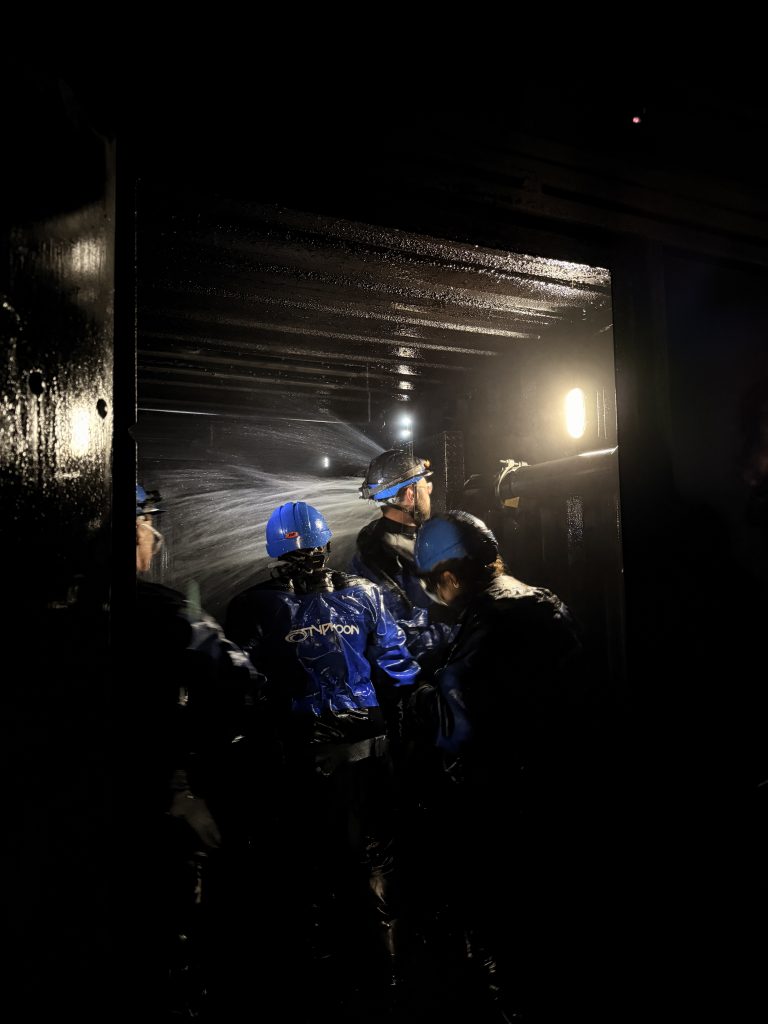
Damage control delegates holding up paratech in simulation container

That’s why, at the Maritime Skills Academy, we host our training in four stages: classroom learning, dry practice, external practice, and a final exercise with a fully simulated hull breach and burst pipes.

Damage control training drills and exercises

Flooding Response and Scenarios

Using our damage control simulation container, we can replicate onboard emergencies that require crew to practice closing watertight doors, isolating compartments,  and performing counterflooding and ballast adjustments.

With progressive flooding, crew will be able to manage prioritisation, evaluating which area is the greatest contributor and which will become submerged first.

Shoring and Patching Drills

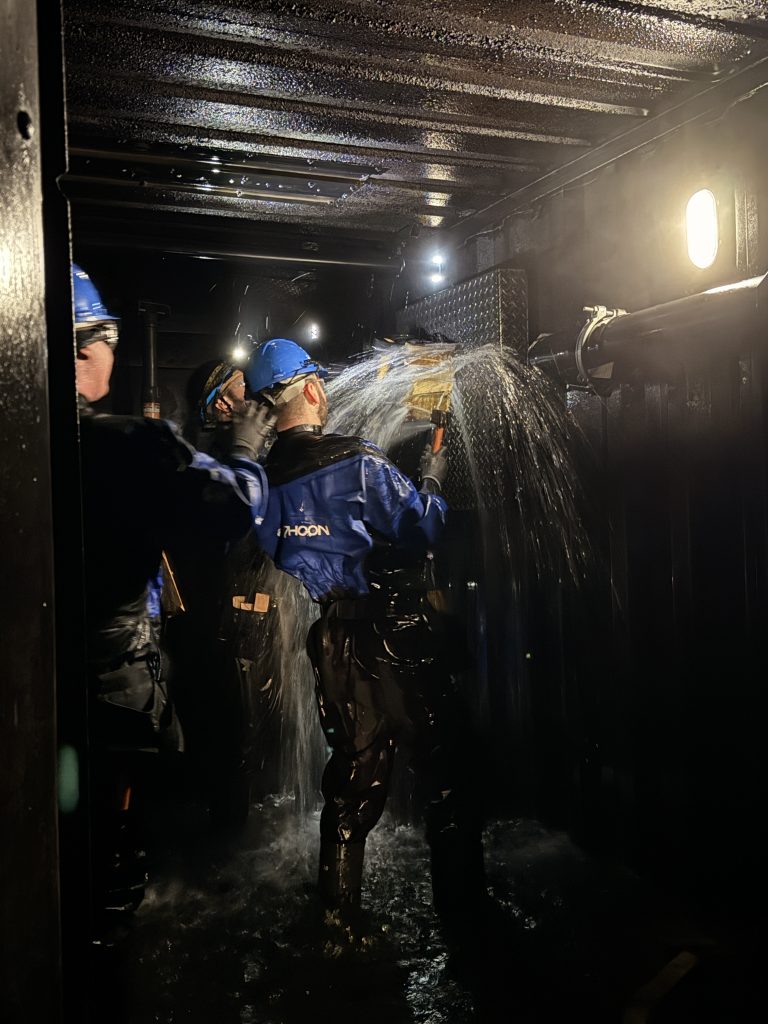
At the Maritime Skills Academy, we simulate realistic water flows to train crew in the use of shores, timber, box patches and collision mats, all whilst operating under growing pressure. Putting crew in a simulated environment allows a deeper understanding of equipment capabilities and limitations.
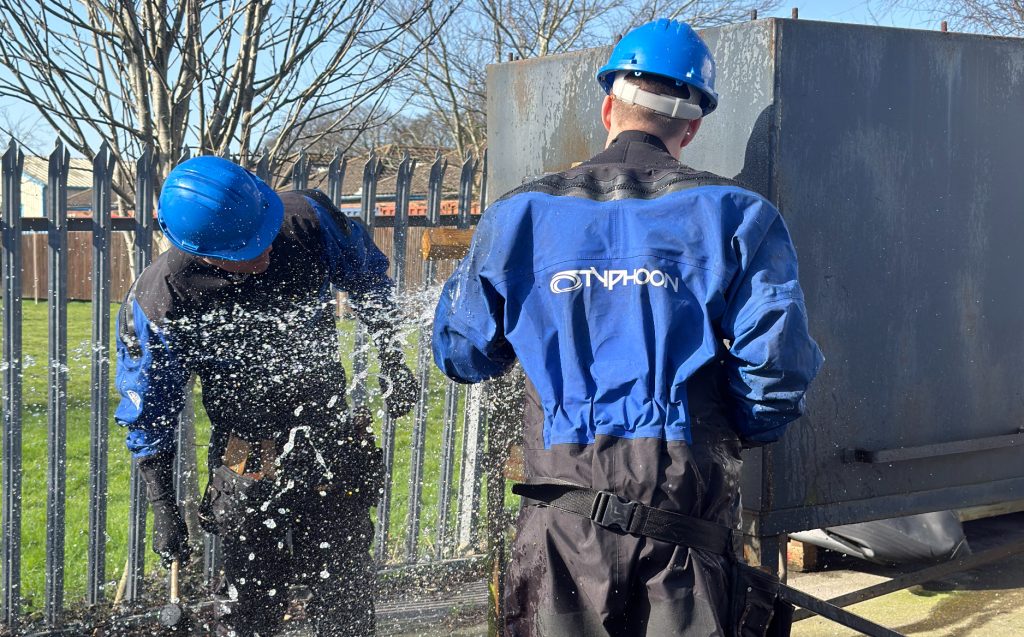
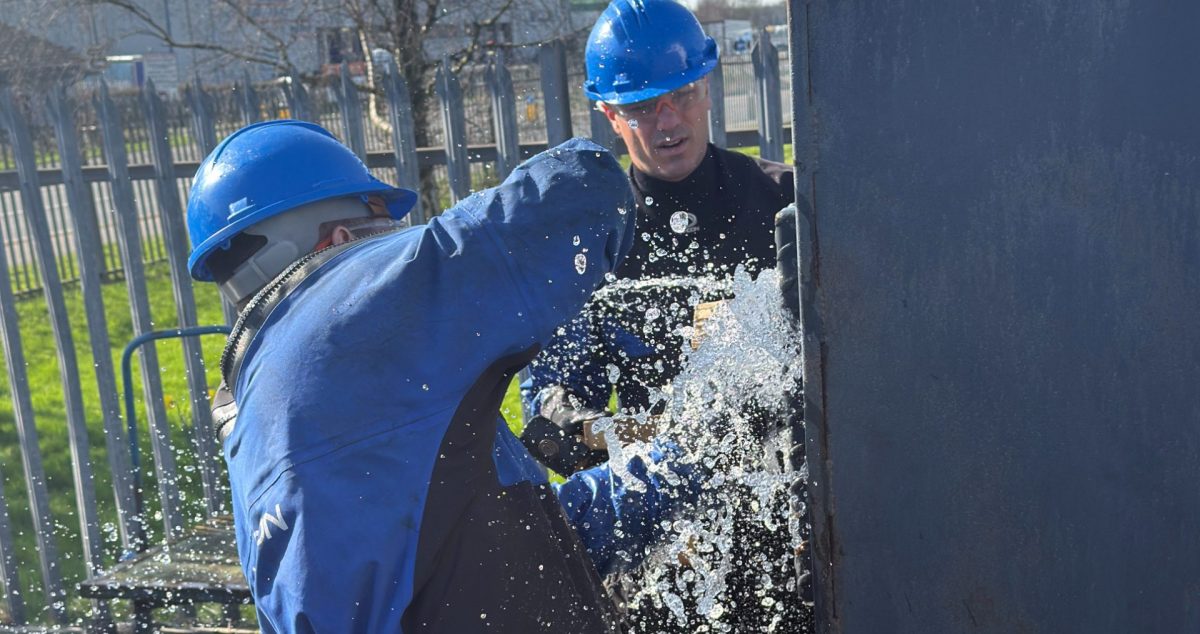
Damage control delegates practicing leak management. Using a simulation box

Creating scenarios like this not only prepares teams for the worst but also improves cross-department cooperation and teamwork.

Communication and Command Drills

Damage control training puts a team’s communication skills to the test. Operating under loud, stressful and uncomfortable conditions can disrupt clear, effective communication and put the vessel at risk of further damage.

This is why a clear hierarchy and action plan are a necessity in emergency situations like this. If team members are all aware of their roles and who they answer to, there is no need to delegate in response to an emergency.
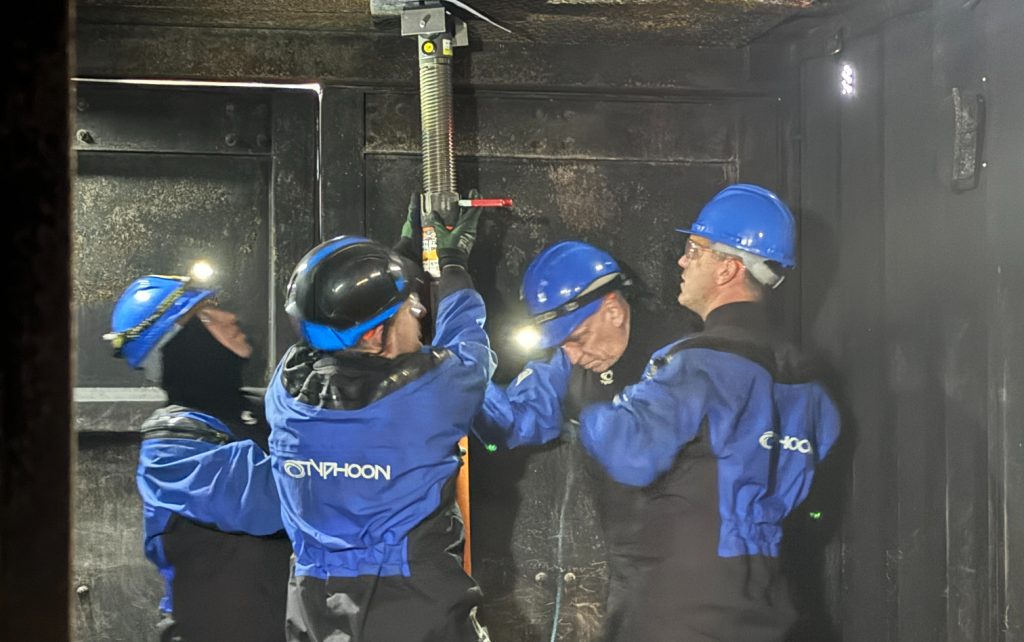
Four damage control delegates fitting paratech in a container during their final exercise

Similarly, using equipment to communicate across departments and to shore is essential for managing a damaged ship. Shore-based professionals will need to be aware of the ship’s condition to prepare emergency services for rescues and clear space for the vessel if an emergency stop is required.

Abandon Ship and Casualty Triage Rehearsals

If the damage is beyond management, crew will be required to organise an abandon ship scenario. At the Maritime Skills Academy, we train delegates on safe handover practices that reduce confusion and casualties.

Damage Control Training at the Maritime Skills Academy

We believe in training crew to manage damage control scenarios, using industry-standard equipment and technology that will be accessible when on board. Simulating multiple real-world scenarios that will prepare crew to work as a team to manage flooding and further damage.

Investing in regular damage control training is essential for vessels carrying valuable cargo, whether it be goods or passengers, and can save lives.

To find out more about our facilities’ damage control capabilities, find the full course details here, or to book contact our team today.
Maritime Damage Control | What Ship Owners and Operators Must Know to Stay Compliant

Why proactive training for maritime damage control is non-negotiable, and how the Maritime Skills Academy leads the way.

When a maritime emergency occurs, whether through collision, grounding, flooding, or structural failure, your crew’s ability to respond swiftly and effectively can determine the difference between a controlled incident and a catastrophic loss. Maritime damage control is not a best practice; it is a mandatory compliance requirement under international maritime regulation.

Maritime Damage Control Training at the Maritime Skills Academy in Kent.

For ship owners and operators, understanding these obligations is essential. Having the correct procedures, documentation, training and drill routines is an expectation of regulatory practice under the top governing bodies, SOLAS, STCW and the ISM Code.

And yet very few training organisations have the capability for facilities to deliver genuine, hands-on damage control training. In fact, the Maritime Skills Academy (MSA) is the only UK training provider that delivers a dedicated maritime damage control course, giving operators a unique opportunity to ensure full compliance while enhancing operational resilience.

Why Maritime Damage Control Matters More Than Ever

With international regulators tightening their expectations around emergency preparedness, passenger ships are required to conduct damage control drills every three months under new SOLAS updates. Each drill is designed to test crew responses to scenarios such as flooding, stability loss, or other structural emergencies. These drills must simulate varied conditions and require crew to operate key systems such as watertight doors, bilge pumps, cross-flooding systems, and flooding detection devices.

Additionally, at least one drill annually must include activation of shore-based support to validate communication systems and stability assessment protocols.

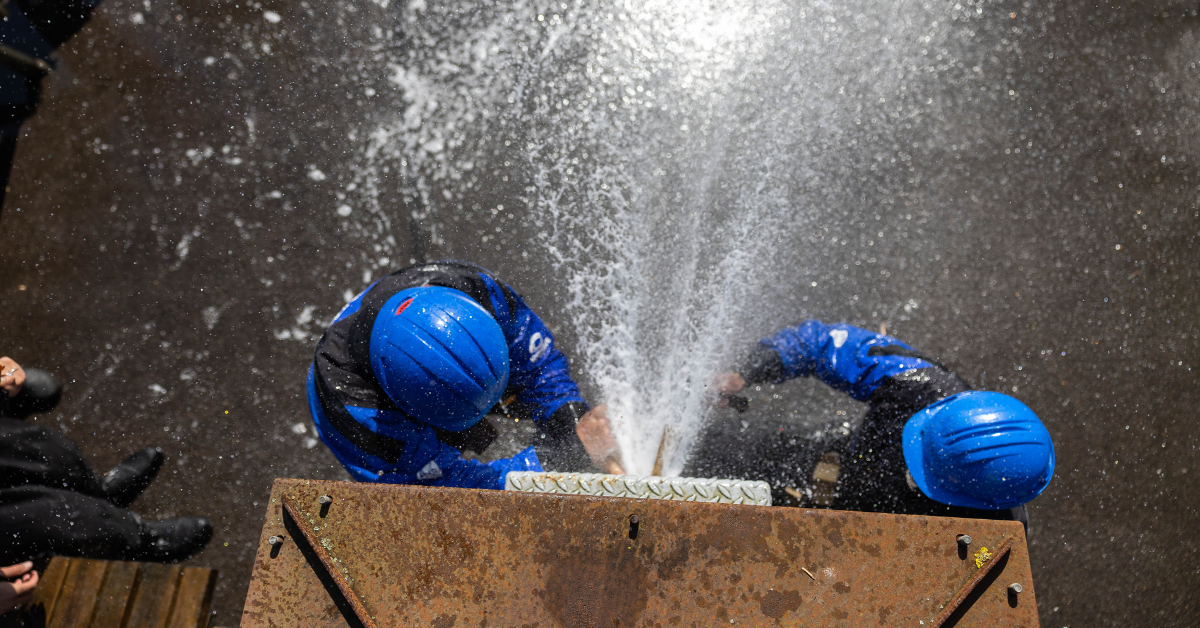
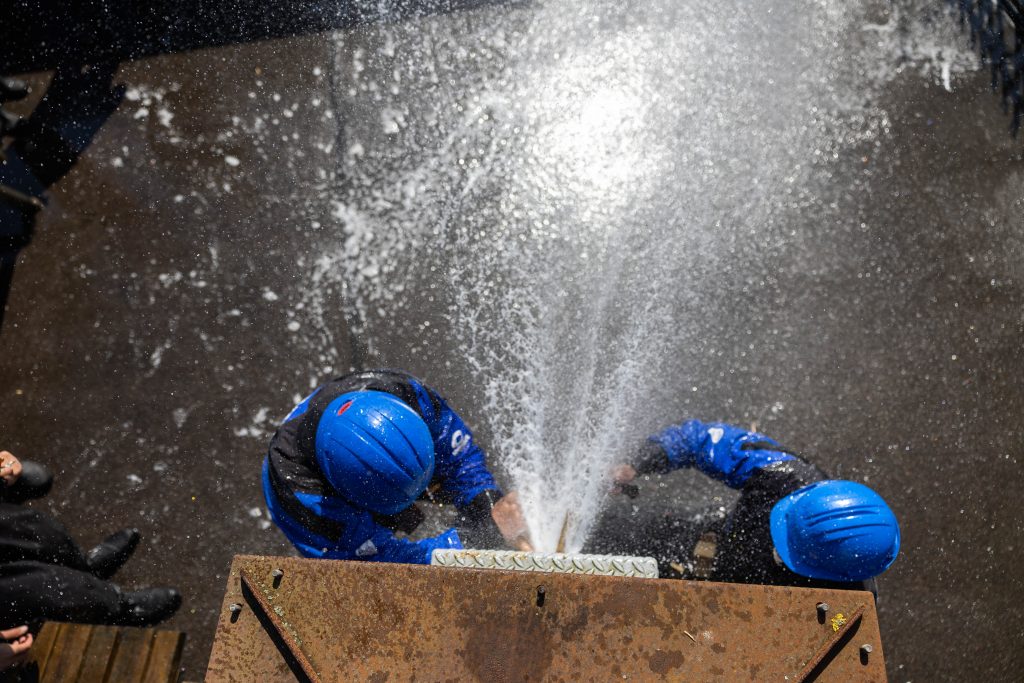
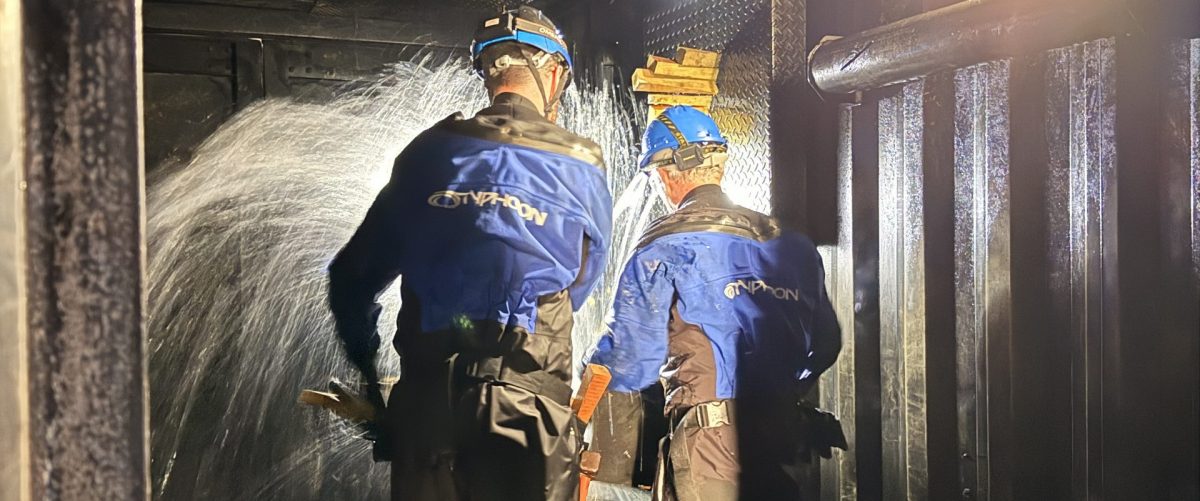
Maritime Damage Control Training at the Maritime Skills Academy in Kent. There are four crew members assessing a burst pipe with water spraying behind them.

Regulatory Requirements Every Owner and Operator Must Meet

No matter the vessel, safety implementation is there for a reason, and respected bodies of authority regulate the conditions of these vessels to ensure everyone is operating at a safe standard.

Authorities such as SOLAS, the ISM Code and STCW all stress the significance of regular drills and crew being thoroughly versed in emergency procedures. However, many operators struggle to maintain these expectations.

Despite clear regulatory expectations, these weaknesses can be, and regularly are, identified during flag-state inspections and ISM audits.

The most common pitfalls for operators are insufficient practical training, lack of realistic damage control situations, inconsistent drills, gaps in familiarity and audit findings.

How to close the Compliance Gap with Maritime Damage Control

As the UK’s only provider of dedicated maritime damage control training, the maritime Skills Academy offers an unparalleled service to ship owners and operators seeking to meet their regulatory obligations and enhance real-world readiness.

Our maritime damage control training course allows crew to train in realistic, controlled flooding environments, operate live bilge systems and watertight closure, practice flood containment with dewatering techniques, patching and shoring.

By recreating the high-stress environment under the guidance of our skilled instructors, crew are able to put their classroom learning into practice which is essential for real-world capability, bridging the gap between drills and emergencies.

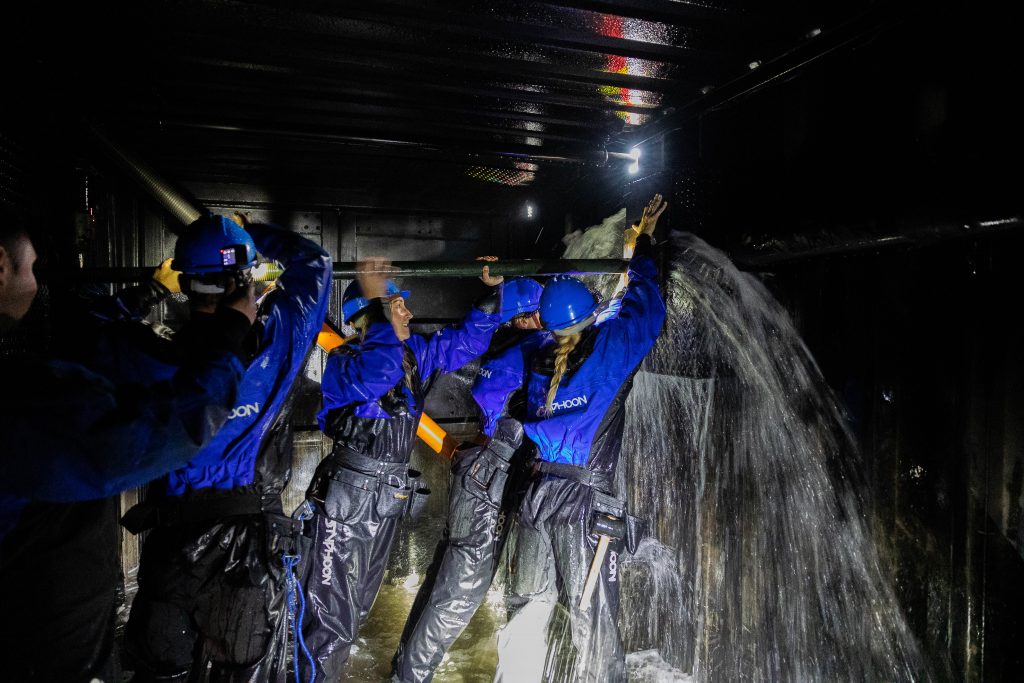
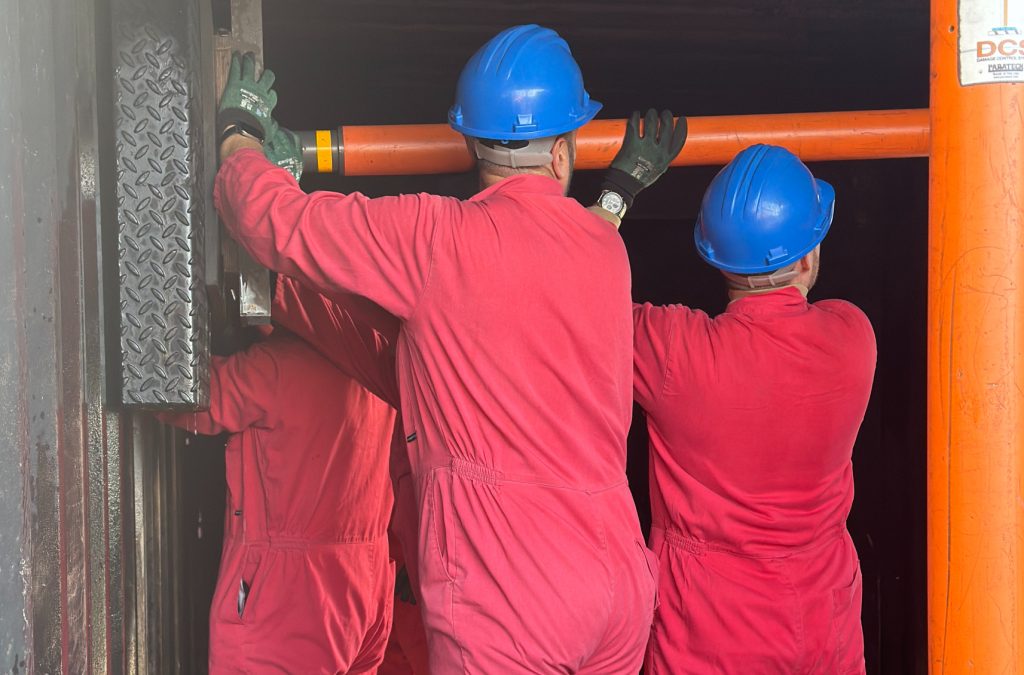
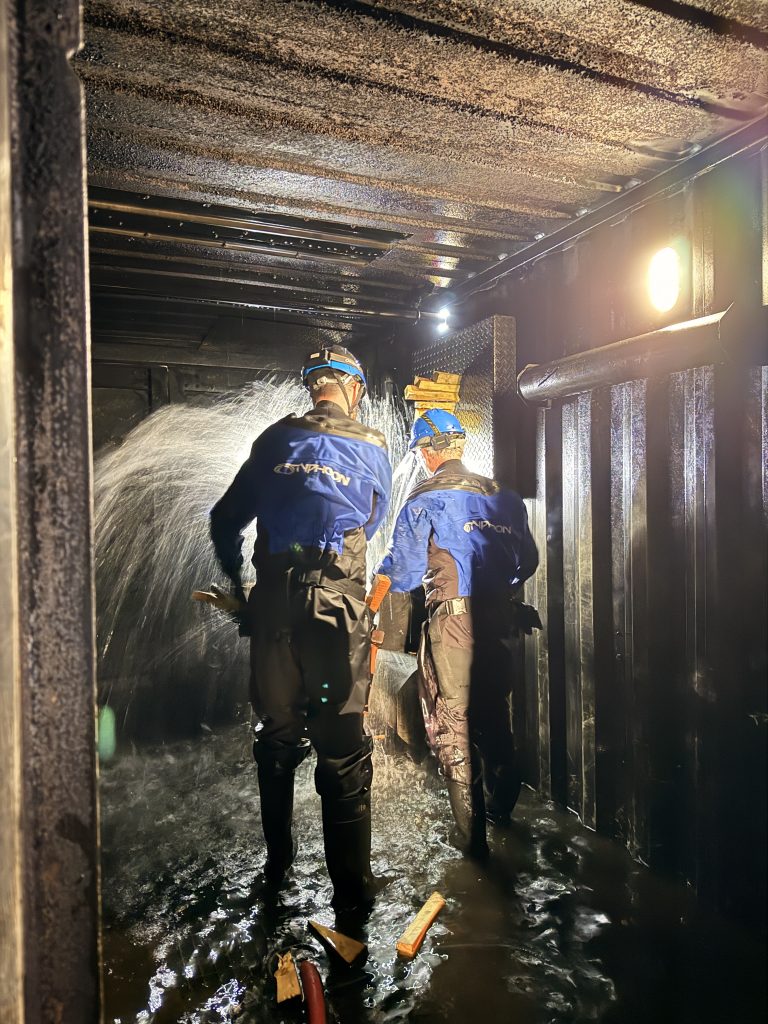
Maritime Damage Control Training at the Maritime Skills Academy in Kent. The image is of the inside of a container, posing as the interior of a ship's engine room that might experience a burst pipe or rupture. There are three crew members trying to stop the water flowing through a burst with wooden blocks.

Strengthen your compliance with the Maritime Skills Academy

Ship owners and operators carry the ultimate responsibility for ensuring their vessels and crew can withstand the unexpected. Strengthen your compliance. Strengthen your crew. Strengthen your ship.

The Maritime skills Academy is ready to support you with the UK’s only comprehensive maritime damage control training solution.

Why Damage Control Training is Essential for Maritime Professionals

Working at sea comes with unique challenges and dangers that demand rigorous preparation. One of the most critical components of maritime training is damage control. This vital skill set enables crew members to act effectively in emergencies, potentially saving lives and protecting the ship and its cargo.

Let’s take a look at why damage control training is indispensable for maritime professionals by discussing how your crew can benefit from the course.

Safety of the Crew

At sea, the crew’s safety is paramount. Prompt action can mean the difference between life and death, whether it’s a fire outbreak, collision, or flooding due to a hull breach. Proper damage control training prepares crew members to react quickly, ensuring that they can stabilise dangerous situations and prevent hazards from escalating.

Preservation of the Vessel and Cargo with Damage Control Training

Ships are often loaded with valuable cargo, equipment, and machinery, all representing significant investments. Damage control training equips the crew with skills to contain and minimise damage, safeguarding the vessel and cargo. This is essential for preventing financial losses and maintaining the ship’s integrity for future voyages.

Damage Control Compliance with International Safety Standards

Most maritime organisations are governed by international standards, such as the International Maritime Organization (IMO) and the Safety of Life at Sea (SOLAS) Convention, which mandate damage control measures. Comprehensive training ensures that crews meet these standards, helping companies avoid penalties and maintain certifications.

Enhanced Confidence and Morale

Knowing how to handle emergencies boosts morale and confidence among your crew. A well-trained crew is more cohesive and resilient under pressure, leading to better decision-making during critical moments. Damage control training fosters a sense of readiness that empowers each team member, making them more effective in all aspects of their work.

Reducing Environmental Impact

When accidents occur at sea, the environment often bears the brunt of it. Spills and fires can lead to extensive ecological damage, affecting marine life and ecosystems. Trained crew are better equipped to contain such incidents quickly, minimising their environmental footprint and contributing to responsible maritime operations.

Mitigating Financial and Legal Risks with Damage Control Training

Emergencies at sea can lead to costly repairs, cargo loss, legal liabilities, and reputational damage. Damage control training prepares crews to manage and mitigate these risks, reducing the likelihood of prolonged incidents that may result in extensive financial loss and legal repercussions.

Boosting Teamwork and Communication

Damage control training requires impeccable coordination and communication between crew. Training fosters teamwork by helping members understand each other’s roles in emergencies, improving their ability to work together effectively. This unity is critical in high-pressure situations requiring quick and coordinated action.

Preparing for the Unpredictable

The open sea is an unpredictable environment where weather, mechanical failures, or unforeseen accidents can present sudden dangers. Damage control training ensures that crew members are prepared for any scenario, from fires to hull breaches. This reduces the element of surprise and allows the team to focus on response rather than panic.

Damage control training is not just about handling emergencies—it’s about creating a culture of preparedness and resilience among crew members. By investing in comprehensive training, maritime organisations demonstrate their commitment to safety, environmental responsibility, and operational excellence. For those who work at sea, this training is a lifeline that enables them to carry out their duties confidently and effectively, knowing they’re prepared for whatever challenges may arise.

Maritime Damage Control Training

Maritime Damage Control Training at the Maritime Skills Academy

To help your crew remain prepared for uncertain emergencies, the Maritime Skills Academy delivers Damage Control Training specifically designed to provide officers and crew with real-life experiences.

In addition to offering full-immersion training at our training centre in Dover, our experts can train crew in drydock with our portable equipment.

Ready to find out more and develop your crew’s skills? Read the full course details and enquire about training by clicking here.