In order for damage control training to have a valuable and lasting effect on crew, a mixture of classroom teaching and practical exercises is required.
In the heat of the moment, with high-pressure water streams pouring in every direction, logic and composure can be compromised.
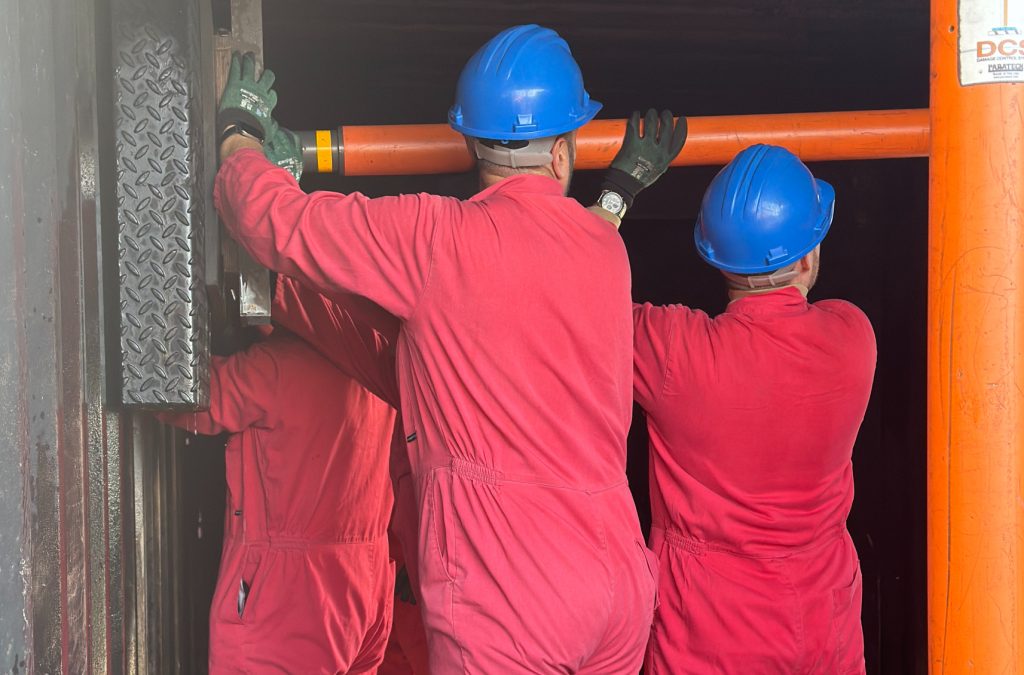
That’s why, at the Maritime Skills Academy, we host our training in four stages: classroom learning, dry practice, external practice, and a final exercise with a fully simulated hull breach and burst pipes.
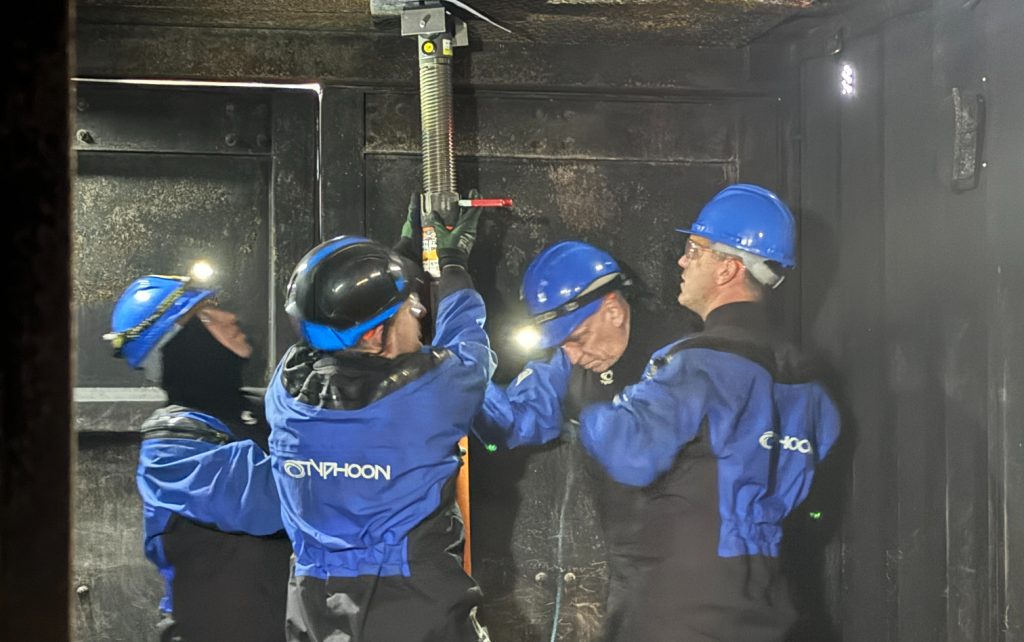
Using our damage control simulation container, we can replicate onboard emergencies that require crew to practice closing watertight doors, isolating compartments, and performing counterflooding and ballast adjustments.
With progressive flooding, crew will be able to manage prioritisation, evaluating which area is the greatest contributor and which will become submerged first.
At the Maritime Skills Academy, we simulate realistic water flows to train crew in the use of shores, timber, box patches and collision mats, all whilst operating under growing pressure. Putting crew in a simulated environment allows a deeper understanding of equipment capabilities and limitations.
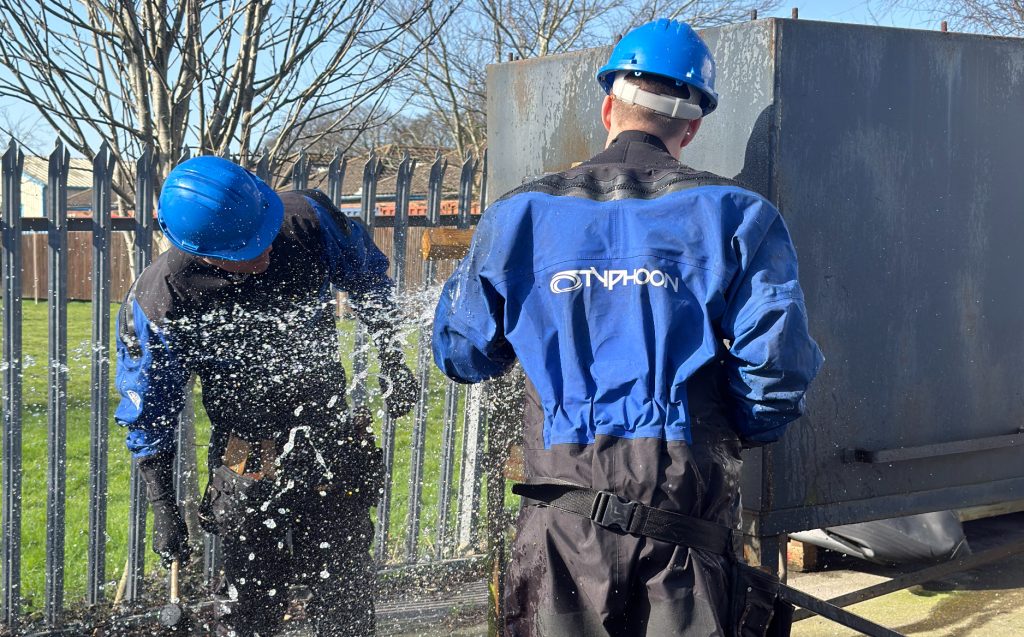
Creating scenarios like this not only prepares teams for the worst but also improves cross-department cooperation and teamwork.
Damage control training puts a team’s communication skills to the test. Operating under loud, stressful and uncomfortable conditions can disrupt clear, effective communication and put the vessel at risk of further damage.
This is why a clear hierarchy and action plan are a necessity in emergency situations like this. If team members are all aware of their roles and who they answer to, there is no need to delegate in response to an emergency.
Similarly, using equipment to communicate across departments and to shore is essential for managing a damaged ship. Shore-based professionals will need to be aware of the ship’s condition to prepare emergency services for rescues and clear space for the vessel if an emergency stop is required.
If the damage is beyond management, crew will be required to organise an abandon ship scenario. At the Maritime Skills Academy, we train delegates on safe handover practices that reduce confusion and casualties.
We believe in training crew to manage damage control scenarios, using industry-standard equipment and technology that will be accessible when on board. Simulating multiple real-world scenarios that will prepare crew to work as a team to manage flooding and further damage.
Investing in regular damage control training is essential for vessels carrying valuable cargo, whether it be goods or passengers, and can save lives.
To find out more about our facilities’ damage control capabilities, find the full course details here, or to book contact our team today.