
Pilot ladder transfers, although safer than ever before, are the most perilous aspect of a pilot’s voyage. An International Maritime Pilots Association investigation (which spanned from the 16th to the 30th of May 2025) found that over 14% of the 5,200 participants reported substandard transfer arrangements.
Enforcing safety standards that ensure crew are prepared for pilot ladder transfers and for navigating pilot ladders in different conditions or scenarios, is as vital as ever.
Maritime pilotage is a service that guides larger vessels into a town’s port. Pilots are familiar with the port in question, and pilot boats are smaller vessels that can manoeuvre easily. Often required during bad weather or poor visibility, the role of a pilot can be high-risk.
Pilotage can, on occasion, require crew to board the larger vessel they are assigned to. This involves using either a gangway, a combination ladder, an accommodation ladder, or a pilot ladder. The most dangerous of these is a pilot ladder.
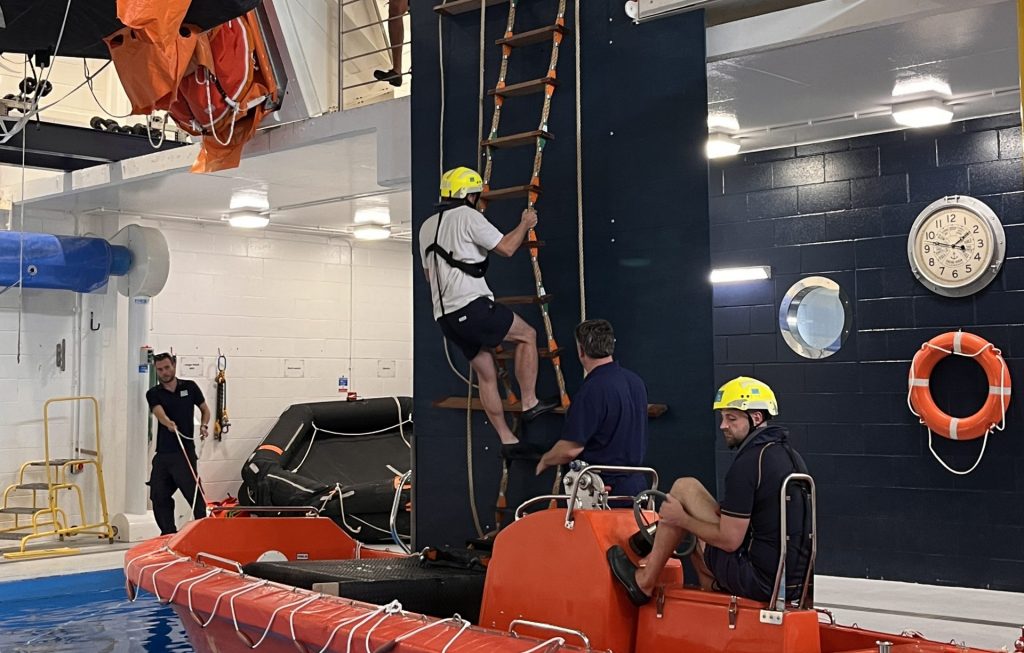
A pilot ladder consists of two strong ropes that hang from the deck or bulwark of a ship, slatted with hardwood spreaders (steps that prevent a ladder from twisting). Marine pilots are required to pull their pilot boats alongside the larger vessel and climb onto the ship whilst both are in motion.
The greatest risk to crew members during a pilot ladder transfer is falling. Whether that be into the sea or back onto the deck of their pilot boat–Both of which can be fatal.
With marine pilots often being called out in poor weather, falling into the sea can risk them getting lost, swept under, or knocked out. Whether a fall is a result of violent seas or faulty, broken ladders, it is important to be trained in controlled falls and rescuing fallen casualties.
Another risk of pilot ladder transfers is crew getting stuck between the two vessels they are transferring to and from. It can be difficult for pilots to navigate steadily beside a larger vessel especially when both vessels are moving. This risk is in almost all cases fatal and is a hard circumstance to train crew for. At the Maritime Skills Academy, we teach crew how to safely abort a pilot ladder transfer, so once a hazard is assessed, evacuation or rectification is as safe as possible.
Training pilots to safely transfer between vessels, using standard methods and procedures, means crew are prepared to respond to hazardous situations. Although we cannot reduce the dangers marine pilots face, we can train them to respond safely and evacuate when necessary.
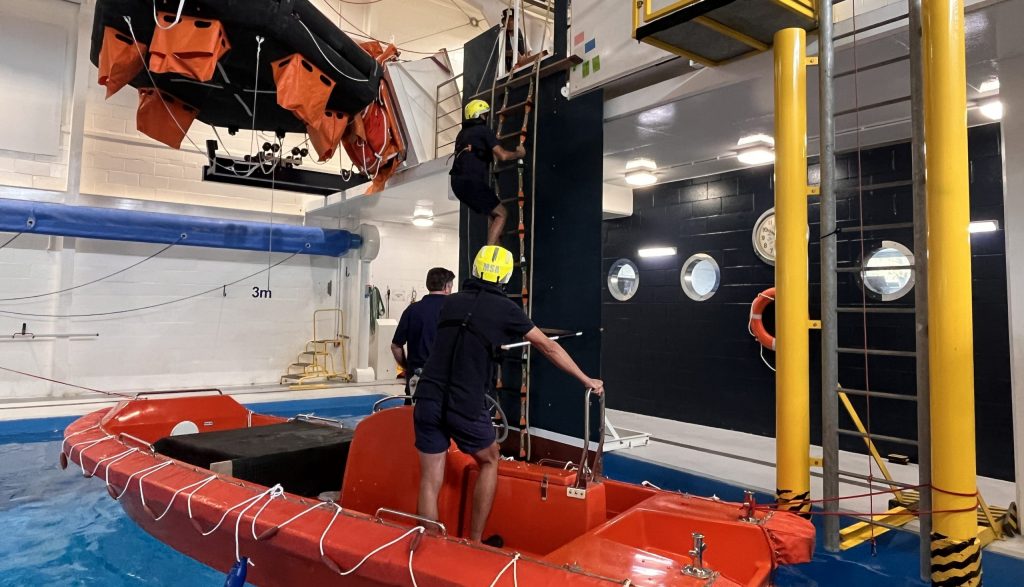
Our course prepares crew to identify and rectify damaged pilot ladders. This means pilots can take responsibility for their own safety if the vessel they are boarding has failed to do so.
We also train crew to assess pilotage risks. If a venture is too high-risk, a pilot may decide against a pilot ladder transfer. But without proper training, risk assessments may be unsatisfactory, and crew could be at risk of injury or casualty.
Our UKMPA-endorsed pilot ladder transfer safety training course focuses on proper rigging, inspection, and maintenance of pilot ladders, as well as risk management during transfer operations. Using both classroom and practical learning to teach pilots about real-world scenarios and showing them how to respond firsthand.
Find out more about our Marine Pilot Ladder Transfer Safety Training here, or contact us to arrange a booking.