
The Primary Survey, also known as DR(S) ABC(D), is a crucial mnemonic in first aid for assessing the severity of a casualty’s injury or illness. By following these steps, you can deliver lifesaving aid while waiting for the emergency services.
Here is a step-by-step guide on how to use it in any scenario:
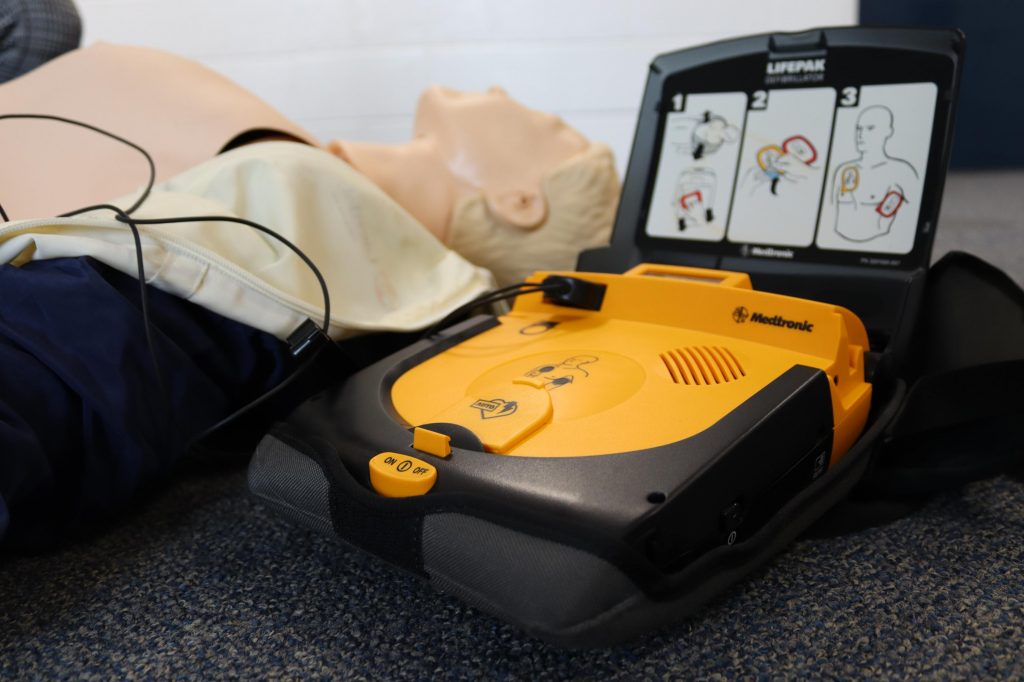
Survey your surroundings for hazards that may have caused the initial injury, or that could endanger you. Protecting yourself is crucial for helping the casualty.
Check for a response, approaching from the feet when possible to avoid straining the casualty’s neck or back.
Call the casualty’s name to check for a response without alarming them. You may pinch their collarbone or gently shake their shoulders to elicit a reaction.
If the casualty is unresponsive, call for help immediately to increase their chances of survival.
If you are in a public place, be sure to ask someone to call an ambulance or to fetch the nearest AED (defibrillator).
Alternatively, call 999 and leave your phone on speaker as you continue the survey.
Check the casualty’s airway for obstructions by gently tilting their head back with one hand while pulling the chin down with the other. Look carefully inside their mouth and throat.
If there is a blockage, you can either use something to move it, like a pen, or roll the casualty on their side to let it drain. You must never use your fingers, as the person could wake and bite down!
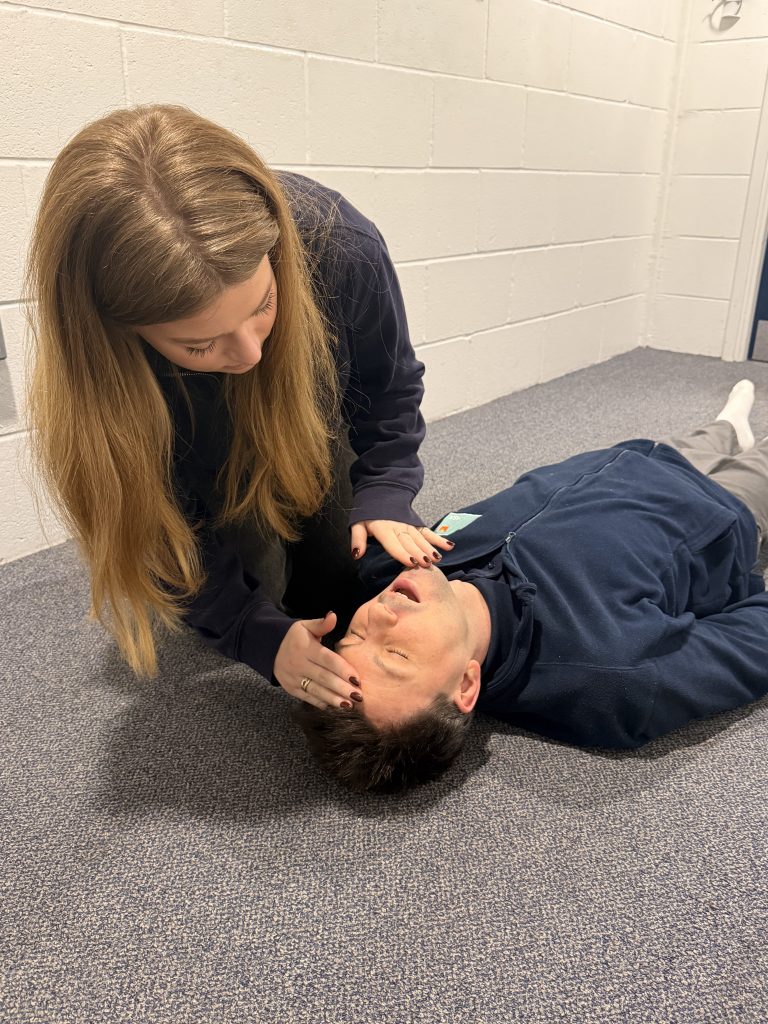
Check for breathing by placing your cheek close to their mouth and nose, watching their chest for movement.
Listen for 10 seconds for normal breathing. If you hear abnormal gasps and neck extension is possible, this is ‘agonal breathing,’ which suggests cardiac arrest.
If they are not breathing, it’s time to begin CPR.
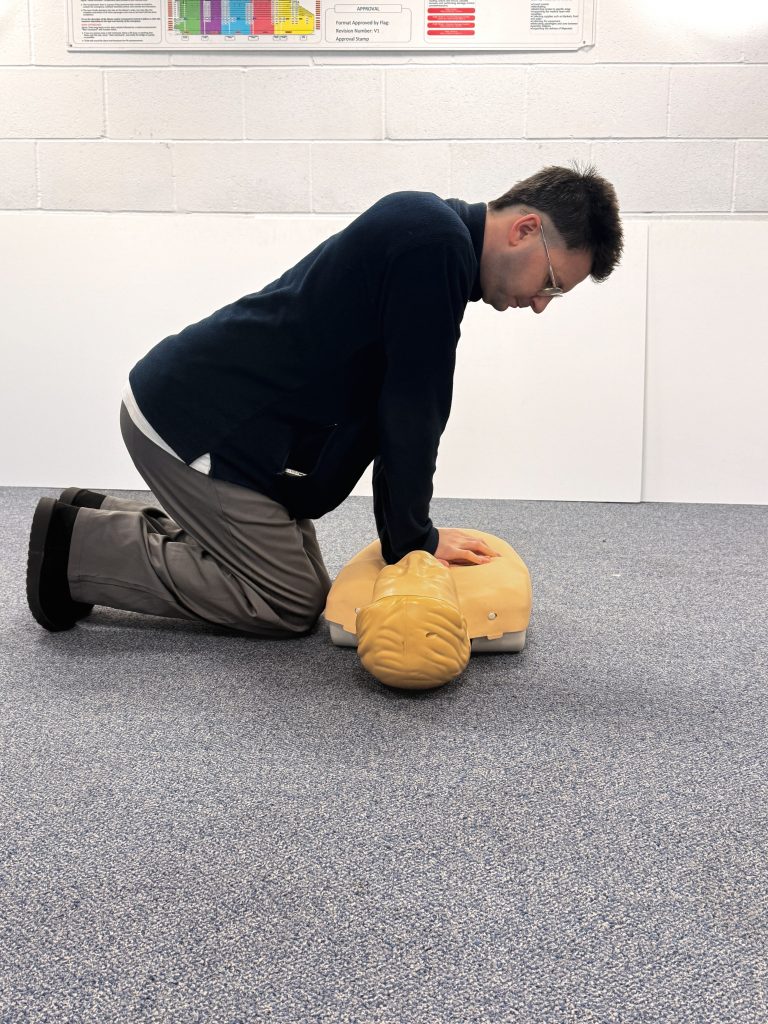
Place one hand over the other, and interlock your fingers. Position your hands between the nipples, at the centre of the chest.
Give the casualty 30 chest compressions followed by two breaths, and repeat for as long as possible. Aim for a depth of 5-6 cm (2 inches) and push at a rhythm of 120 beats per minute.
We suggest singing along to a song with the same rhythm to keep you on track. Try one of these:
It’s important to know that whilst you are trying to save a life, you must not exhaust yourself. Look to swap with someone every 1 to 2 minutes as you wait for emergency services to arrive, or until the person regains consciousness.
If a defib is on hand, then continue with chest compressions whilst someone else continues to set up the machine. Remember to remove any metal on the casualty (such as an underwire in a bra) to avoid burning them once the machine is fitted.
Follow the defibrillator’s instructions and continue compressions after each shock.
By remembering the steps to the Primary Survey and DRS ABC, you can provide immediate first aid and increase the chance of survival for a casualty. Having a step by step guide to casualty response eliminates the risk of confusion and panic, and keeps the casualty, surroundings, and responder safe.