
In accordance with the Confined Spaces Regulations of 1997, confined space training is mandatory for those who may need to enter or supervise a confined space. This training is the responsibility of employers and ensures risks are monitored and casualties are minimised.
The Health and Safety at Work Act of 1974 highlights employers’ responsibility to ensure the health, safety, and welfare of employees and anyone present on their business premises. This act is vast and can be applied in every aspect of a business’s operations, including confined space entry.
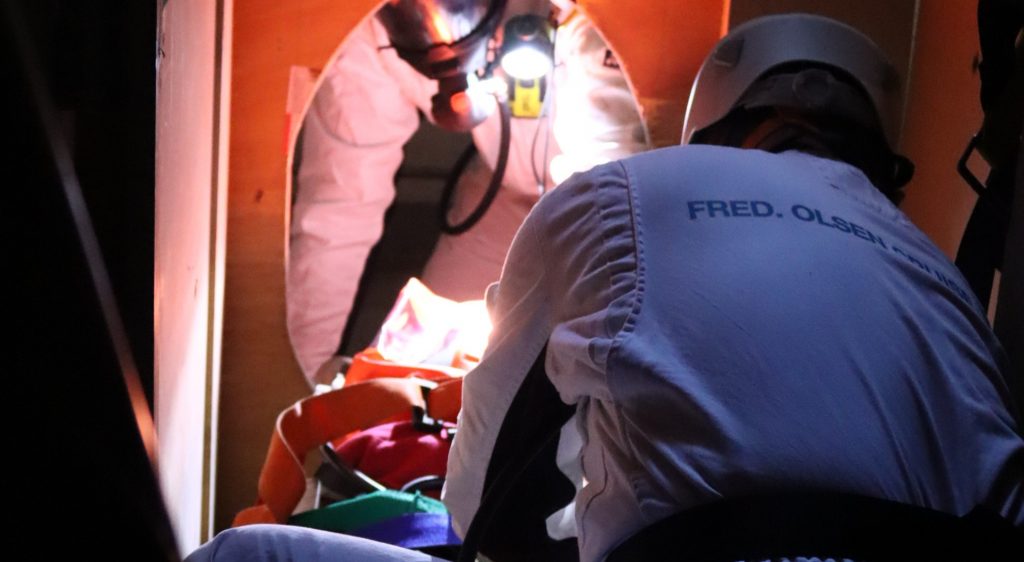
At the Maritime Skills Academy, we have introduced a new series of confined space training courses, to ensure your team is well-trained, your duty as an employer is fulfilled, and incidents in the workplace are prevented.
Confined spaces are categorised by their level of risk and require more in-depth training the higher the entry risk. Here is how to identify a confined space risk as low, medium or high:
| Characteristics | Hazards | Training | |
| Low-Risk | Low-risk confined spaces are well-ventilated with non-toxic air. Usually well-lit and easy to navigate with minimal obstacles. | Although hazards in a low-risk confined space are minimal, entry and exit can be dangerous, especially if a team lack the appropriate training. Using confined space equipment and emergency procedures can be hazardous without training. | Basic entry and exit. Equipment usage and emergency procedures must be taught in order for staff to legally enter a confined space. |
| Medium-Risk | Medium-risk confined spaces can have hazardous atmospheres. This may require breathing apparatus or PPE. There is also an increased risk of poor visibility and physical hazards. | Medium-risk environments have a higher risk of poor visibility and difficult navigation in return. This can increase the likelihood of casualties, meaning staff will need higher levels of training. | Risk assessment prior to entry is essential in medium-risk spaces. Staff must also be trained in BA set and PPE operation, communication between teams and navigation in poor visibility. |
| High-Risk | High-risk environments are guaranteed to have life-threatening air quality, making BA sets essential for safe entry. There is also an increased risk of engulfment and entrapment, and the need for casualty recovery and evacuation. | High-risk confined spaces are guaranteed to have poor visibility, dangerous air conditions and physical obstacles. Staff entering such conditions will require in depth training. | Given the nature of the environment, staff will need training in safety equipment, crisis management, communication, emergency evacuation and casualty recovery. |
In order for an area to be deemed an enclosed space, there must be either full or partial enclosure, making entry and access limited. An enclosed space will have one or more of the following hazards:

Common confined spaces include sewers, pipes, tunnels, confined boilers, trenches, and vaults. If you are unsure if your environment includes a confined space, get in touch with our team to discuss your training needs.
Confined space training generally needs renewing every three years. This ensures a company’s protocols are up to date, and staff are using the most efficient technologies to operate. However, more frequent training can reduce risks further and reduce the chance of staff letting standards and protocols slip.
All new confined space training at the Maritime Skills Academy in Dover, Kent, covers all the essential teachings for those who may need to enter confined spaces. By utilising our state-of-the-art facilities, which include a simulated enclosed space entry way, your team will receive training that is as close to real-life experience as possible. Get in touch today to find out how our training could help you.