The Polar Code – What makes a good course?

Commitment to excellence means going beyond the base STCW requirements.

As global interest in polar exploration and commercial activities grows, so too does the need for robust regulations to ensure the safety and environmental protection of ships navigating these remote and icy areas.

Image of a ship in Polar water, with white snowy mountains in the background | Polar Code

The International Code for Ships Operating in Polar Waters (Polar Code) stands as a landmark framework established by the International Maritime Organization (IMO) to address the unique challenges and risks associated with maritime operations in polar regions. The International Code for Ships Operating in Polar Waters (Polar Code) sets forth critical guidelines to mitigate risks associated with polar navigation. However, compliance with the Polar Code requires not only adherence to regulatory standards but also specialised training for maritime personnel.

Compliance with the Polar Code necessitates a thorough understanding of ice navigation techniques, cold weather operations, and environmental stewardship. STCW training programs play a pivotal role in equipping maritime professionals with the knowledge and skills needed to navigate polar waters safely and responsibly. Seafarers undergo comprehensive training in ice navigation, including principles of ice reconnaissance, interpretation of ice charts, and manoeuvring strategies in ice-infested waters.
Polar Code Training | MSA Portsmouth

Any training programme should include a wide range of different objectives, covering the range of knowledge that is needed to operate in Arctic conditions, including:

  • Ice navigation techniques;
  • Cold weather survival and first aid;
  • Environmental awareness and pollution prevention;
  • Search and rescue procedures.

But what is it that really sets excellent Polar training apart from the rest? The answer, in essence, lies in a commitment to exceeding expectations. As so often, STCW is only a starting point. Excellent operators have a simple yet profound principle: they don’t just meet the requirements; they surpass them. Top quality specialised training goes beyond mere compliance with regulations (which are specifications of the minimum standard of competence).

It is about imparting invaluable wisdom gleaned from the icy frontiers and ensuring that every seafarer emerges prepared for the challenges ahead. Experienced, active Ice Pilots make the ideal instructors. Their wealth of knowledge, traditional tricks, and first-hand insights into the latest regulations set them apart.

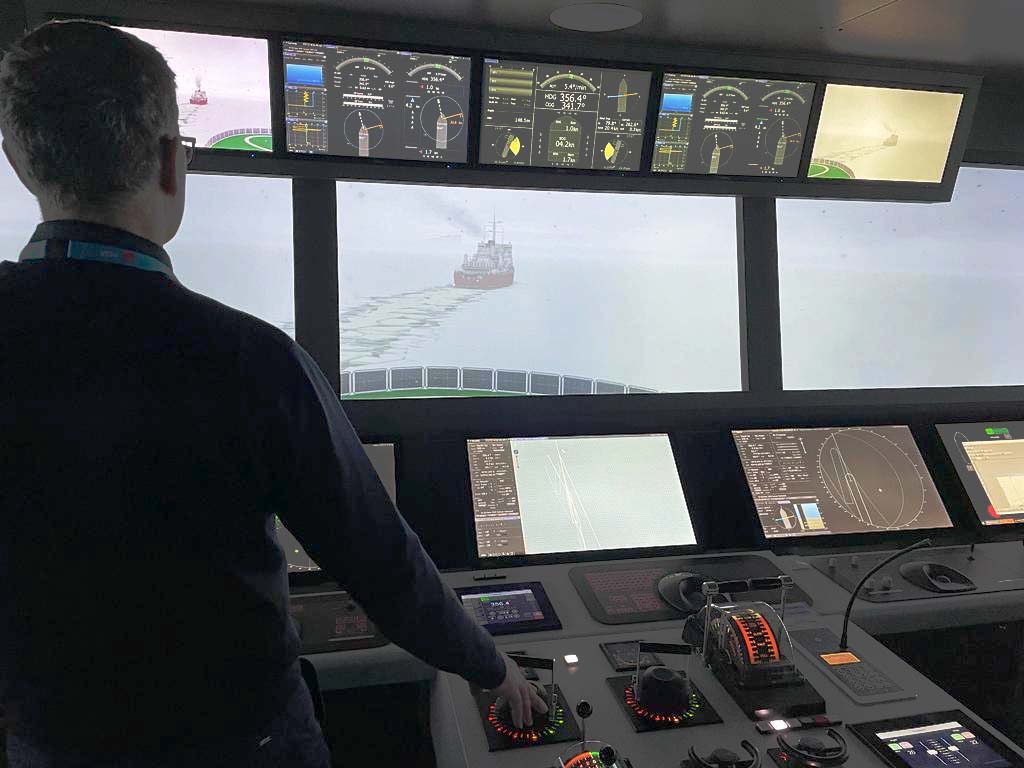
When this unique expertise is backed by state-of-the-art full mission simulators equipped with ice pack modules, it is possible to create a comprehensive and immersive learning experience. A good simulator programme will allow participants to navigate through different ice concentrations, understand the effects of ice on ship manoeuvring, sail in convoys, and conduct RIB operations – all in a safe and controlled environment.

Image of a boat in icy waters | Polar Code Training MSA Portsmouth

Instructors must be more than just lecturers – they should be coaches and mentors leading participants through every step of the course. The underlying philosophy is not merely to impart knowledge but to cultivate understanding. I strongly believe that true mastery of Polar navigation comes from mentorship, guidance, and practical application. The instructors serve not only as educators but as guides, whose influence extends far beyond the confines of the training room.

Going the extra mile, not because we have to, but because we understand the significance of preparing seafarers for the challenges that lie ahead should be the essence of all training, but especially
in preparing seafarers for the extreme conditions and sensitive environment of the Arctic. The combination of experienced instructors who can impart real-life learning and cutting edge simulators that go beyond the basics provide the ideal platform for seafarers to learn, grow, and excel – and we all want our crew to excel.

At the Maritime Skills Academy we offer MCA Approved Polar Code Training courses at our state-of-the-art facilities, in Portsmouth. Book online now by visiting the website here.

This article was written by Maritime Skills Academy Director of Training and Simulation (MSA Portsmouth), Capt. Josip Kulas, for Seaways.
John’s Career At Sea Journey

We sat down with John Galloway, Senior Maritime Simulator Instructor at MSA Portsmouth, to find out about his career at sea and the exciting opportunities life at sea can offer for people wanting to get into the industry. 

What made you consider a career at sea?

John: “A family friend of ours was working as a submariner in the Royal Navy and was really enjoying it. I wanted to get a good job and start earning a living. I am the only person in my family history that has worked at sea, my grandparents worked in the Royal Air Force and Army. I decided to join the Royal Navy as a Junior Rating once my younger brother had turned 16 years old, as that was always his plan. When I was able to choose my modules, I eventually went into nuclear submarines, as this is something I was really interested in.

I was working as an apprentice butcher for a year after I left school and before I joined the Navy for six years!”

Was a career at sea always an option for you?

John: “In my day, the careers advisors at school weren’t that open about different industries, they didn’t tend to speak about the career opportunities available within the Merchant Navy, so I only knew about the Royal Navy. I wasn’t aware of all the opportunities around different vessels, like cruises and superyachts. If I knew of the Merchant Navy at the time, I probably would have applied there straight away instead.” 

What roles did you work in?

John: “I worked in the Royal Navy for 6 years before leaving. Nowadays the Royal Navy certifications are interchangeable with the Merchant Navy, however this was not the case in my day. I went to work in the North Sea as an uncertificated Engineer, using my knowledge I had learnt during my time in the Navy. 

During this time, I attended the City of Glasgow College where I gained my 1st Officer licence. I was working month on/month off but I would take a block of time off to study at college. I was able to save up some money from working and was able to self-fund my studies at the college. 

I then worked as a 2nd Engineer at North Star Shipping on oil rig service vessels. This is very ironic, but I get very sea-sick, and the North Sea is not the place you want to be if that’s the case. So after 7 and a half years, I sent my CV to Viking Crew as I saw an advert for the company on a shipping magazine whilst at sea. 

I was successful and started working for Windstar Cruises as a 3rd Engineer, sailing all around the world for about 6 years. My favourite places I visited were Vietnam and Santorini. I had my most expensive dinner there! I met my now wife whilst working at Windstar Cruises so it was a special time.

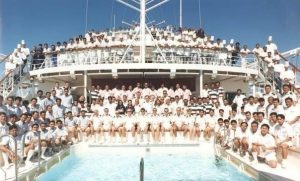
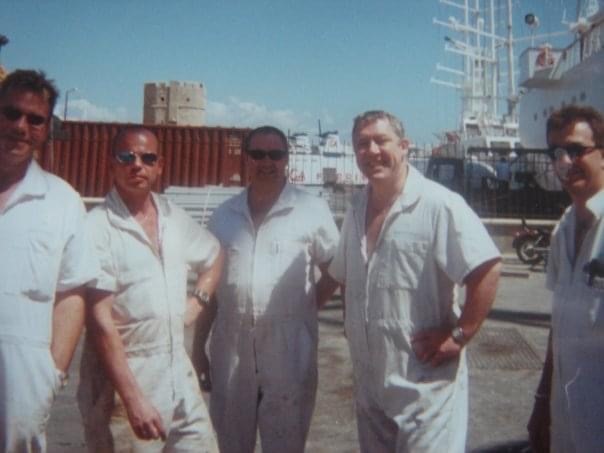
John with fellow Windstar Cruises engineers, in Rhodes, Greece | John's Career at Sea Journey
John with fellow Windstar Cruises engineers, in Rhodes, Greece


I then took some time off and moved to Fort Lauderdale, USA, with my wife. Soon after, I used Viking Crew’s Placement Services again to get a job on a new superyacht project. I started working as Chief Engineer on some magnificent superyachts, sailing to lots of beautiful places. 

I then started working ashore for Fraser Yachts, and was an Engineer Superintendent.

Just before the pandemic hit in 2020, we decided to move back to the UK and I worked as a Safety Engineer at a theme park in Yorkshire. I was approached by Dohle Yachts and worked there for a while.

During this time, I was intrigued by the Bridge Simulators at Maritime Skills Academy Portsmouth, and went down to have a look. The team at MSA Portsmouth approached me to work as a Senior Simulator Technician and I have been here for a year and a half. At 60 years of age I have started a new career! I absolutely love working at MSA Portsmouth, this is my ideal job. 

It’s great that I have worked in various roles previously as I feel I now have a lot of experience to share with delegates who train here.”

Would you recommend a career at sea?

John: “Of course, yes. A life at sea isn’t for everybody, but for those who do take the opportunity, it’s definitely worth it. There was a young Captain who was going to quit as a cadet, and I took him aside and said to him, “get your licence first, and then quit if you still want to.” Fast forward a few years, and now he is a Captain for some of the big cruise ships. If you’re considering a career at sea, then I would encourage you to speak to others in the industry to learn more before embarking in this lifestyle.” 

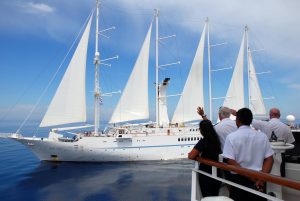
John and crew onboard Windstar's Wind Surf vessel | John's Career At Sea Journey
John and crew onboard Windstar Cruises Wind Surf


Would you still choose a career at sea if you were a young person/teenager now?

John: “Yes, I think I would have missed the military side, and instead gone straight into the Merchant Navy, as I’ve been playing catch up for the six years I spent in the Royal Navy. Obviously, the conditions are changing and have changed since I was a young person, but it’s a way of life. You’ve got to have that quality of life on board as well.” 

Windstar Cruises Wind Surf cruise ship | John's Career At Sea Journey
Windstar Cruises Wind Surf vessel


What opportunities can a career at sea offer? 

John: “The one thing I would say is, age equals experience – and that’s a valuable commodity in this industry. The experience is a bonus, there’s plenty of jobs with the shipping companies, and you can go ashore when it suits you. It’s also a lifelong career, but that doesn’t mean it is for everyone. Nevertheless, take every opportunity, as you never know what will come of them.”

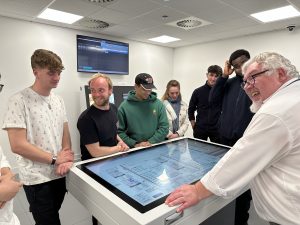
John teaching Chiltern Maritime cadets at MSA Portsmouth | John's Career At Sea Journey
John teaching cadets at MSA Portsmouth


What advice would you give to someone deciding on a career at sea?

John: “My advice would be to think long and hard about your lifestyle. If you want a life and family, it might be better waiting until after your career. It’s the one fundamental flaw of a life at sea, and that is relationships. For example, if you’ve got somebody waiting at home, and I speak from experience from my earlier days, what happens is you get home off a trip and all you want to be is at home. What about this person, they’ve been at home all this time, all they want to do is get out with you. There’s definitely a compromise. 

Only through experience, you learn this, because life at sea is very much like ‘Peter Pan Syndrome’ in my opinion, it’s for people who don’t want to grow up. Having said that, you do become more pragmatic with the experiences. 

In certain aspects of my life, I felt as though I certainly gained some independence, and it made me mature quicker. Plus, the financial rewards are good. 

In the Royal Navy, I of course missed home, as I was away for nine months at a time. Even though you’re surrounded by all this fun, homesickness is still a factor. Essentially, I’ve always wanted to be a homebody but it’s kind of ironic with the lifestyle I chose.” 

Feeling inspired by John’s story and want to explore a career at sea? Click here to explore our current vacancies at Viking Crew. 

Date of Issue: 26th March 2024
Last Edited: 28th August 2024

University of Gibraltar Working to Meet the Needs of the Industry

Flexibility and agility are not only the watchwords of the flag and port in Gibraltar, but they are also strong guiding principles for the university which has complemented its maritime academic programmes with high quality technical courses for the industry. 

The School of Maritime runs a BSc (Hons) Maritime Science with Cadetship programme (Nautical or Engineering), which combines academic qualifications with practical training through MCA approved, guaranteed placements. The University of Gibraltar recently became an MCA approved centre for this academic programme and is also responsible for placement management and technical training, seen as much needed services for the local maritime industry to ensure it is future-proofing its development and sustainability in the sector. 

Picture left to right, Head of School (Maritime Science) Capt. Sukhjit Singh, Maritime Academy Manager Aaron Lopez, MSA Operations Director Mark Jaenicke, and VMG Managing Director Matthew Jaenicke. | University of Gibraltar x Maritime Skills Academy Gibraltar
Picture left to right, Head of School (Maritime Science) Capt. Sukhjit Singh, Maritime Academy Manager Aaron Lopez, MSA Operations Director Mark Jaenicke, and VMG Managing Director Matthew Jaenicke.

The university has developed strategic partnerships with the Government of Gibraltar, the Gibraltar Port Authority, and the Gibraltar Maritime Administration. In addition, the university works in partnership with Viking Maritime Group (VMG) to provide a well-established portfolio of world-class maritime education and training, further supporting Gibraltar’s status as a Maritime Centre of Excellence.

“VMG are industry leaders in Crew Management, Maritime Training, and Cadet Management, and together we have successfully synchronised our approach to the development and delivery of high quality, industry-relevant, maritime technical training”, the university said. 

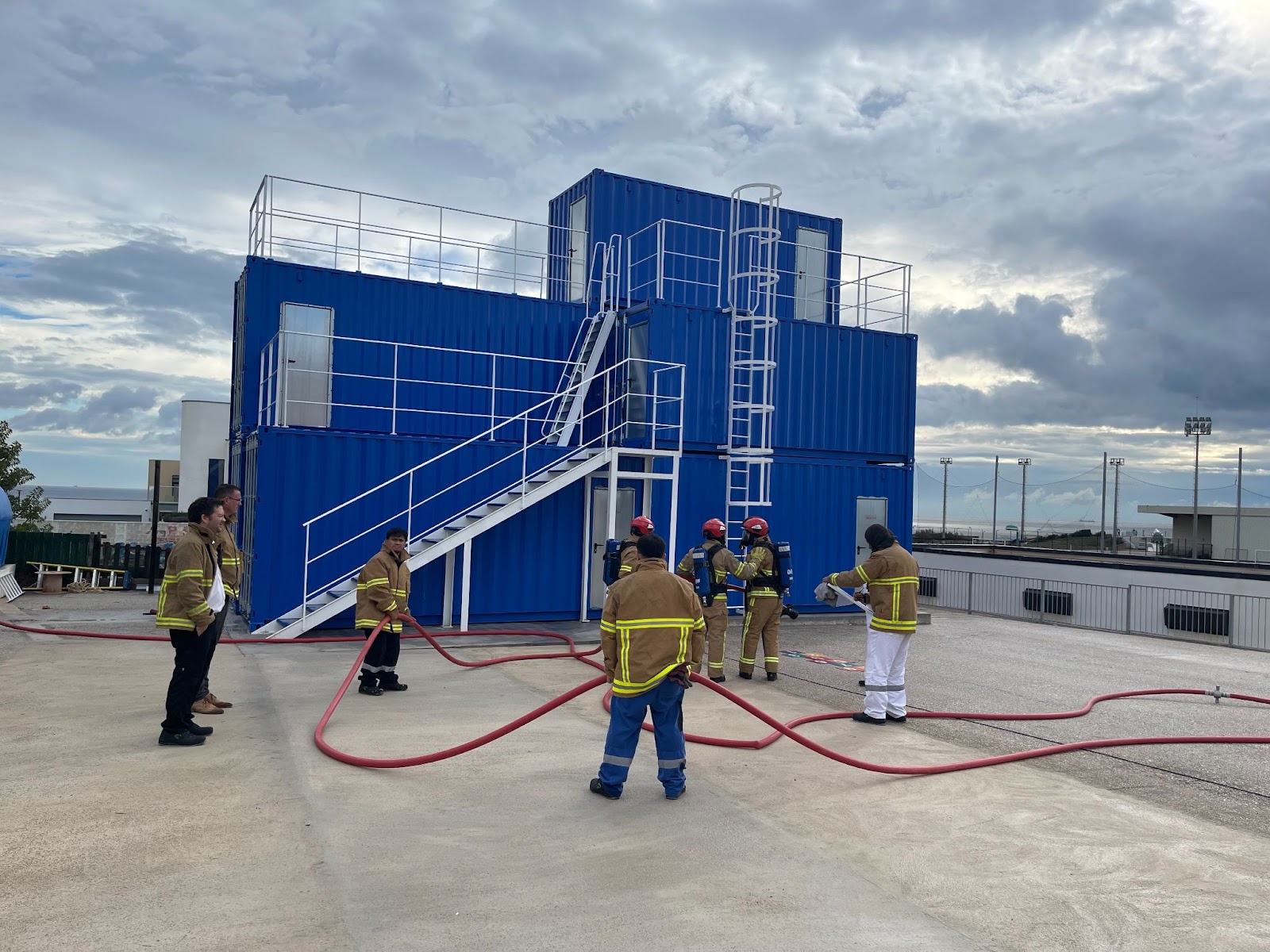
MSA Gibraltar opens a new fire training facility with the University of Gibraltar
MSA Gibraltar opens a new fire training facility with the University of Gibraltar.

The University of Gibraltar is also working with all bunker suppliers and several ferry operators in the region and their respective ship management and crew management representatives, together with numerous local agents, Gibdock and diving services companies. 

And what about demands for the courses? Well, according to Aaron Lopez, Head of the Maritime Academy, the BSc (Hons) Maritime Science with Cadetship programme (Nautical or Engineering), is now into its third year and has gained significant traction. “We have doubled our intake every year as word spreads about our innovative approach to the programme structure (three year degree that includes OOW and guaranteed placements with quality operators). Cadets are being recruited from around the world such as the US, UK, Morocco, and elsewhere.

“Operators themselves are showing increasing interest in offering placements and subsequent employment due to the calibre of our cadets. In terms of technical courses, we provide MCA approved Maritime STCW training, tailored beyond compliance training, and bespoke training for the fast-evolving maritime industry, as well as the 10,000 ship calls together with 20,000 crew changes per year in Gibraltar. The 2024 course calendar is well underway, having over 40 operational beyond compliance fire fighting courses booked by major cruise companies calling in Gibraltar, and STCW training courses running every month of the year”, he said. 

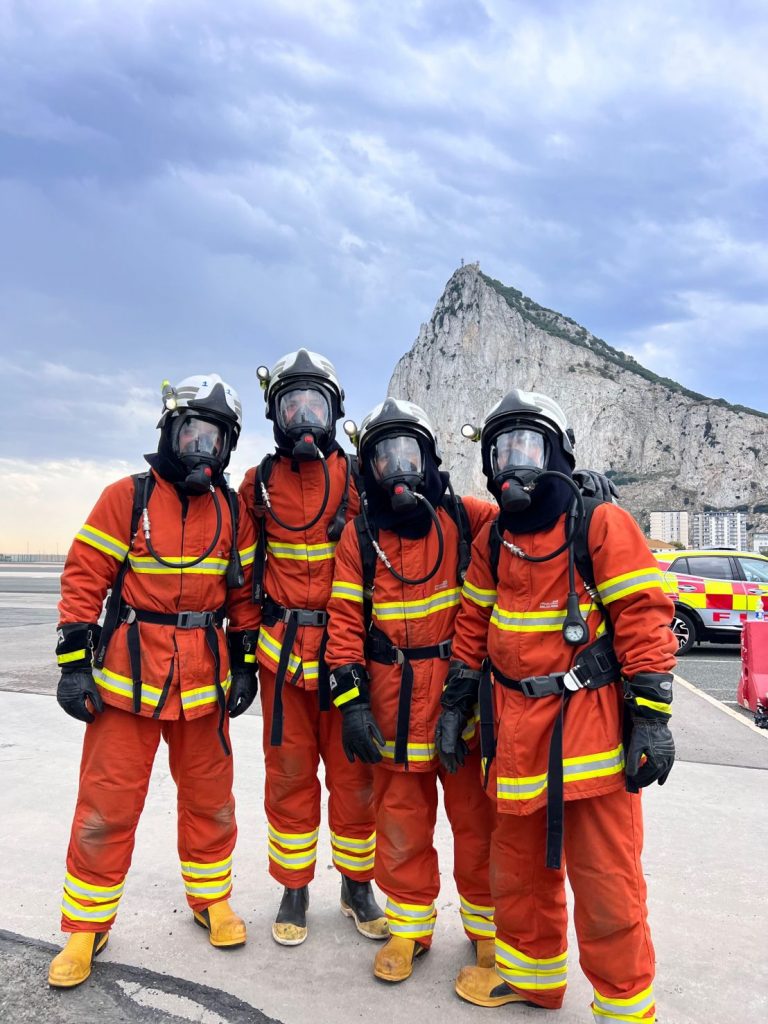
MSA Gib Cadets in their fire wear for firefighting training | University of Gibraltar
MSA Gibraltar Cadets in their fire wear for firefighting training.

“Demand is primarily coming from the cruise sector, as they come alongside Gib Port and the close location of the University Maritime Academy allows for easy pick up of crew for training and return back on board, before the vessel departs.

Having our courses consistently up and running allows vessel operators and managers to maximise productive time during their call in Gibraltar”, he stressed. 

At the Maritime Skills Academy, our brand-new fire training ground, in partnership with the University of Gibraltar, offers clients a further advanced, and modern training centre within Southern Europe. To find out more about the Maritime Skills Academy Gibraltar, visit our website here. 

This article was written and published by Ship Management International in their latest edition, which you can view here. 

Date of Issue: 20th March 2024
Last Edited: 28th August 2024